
22–25 June 2026 | Tangier, Morocco
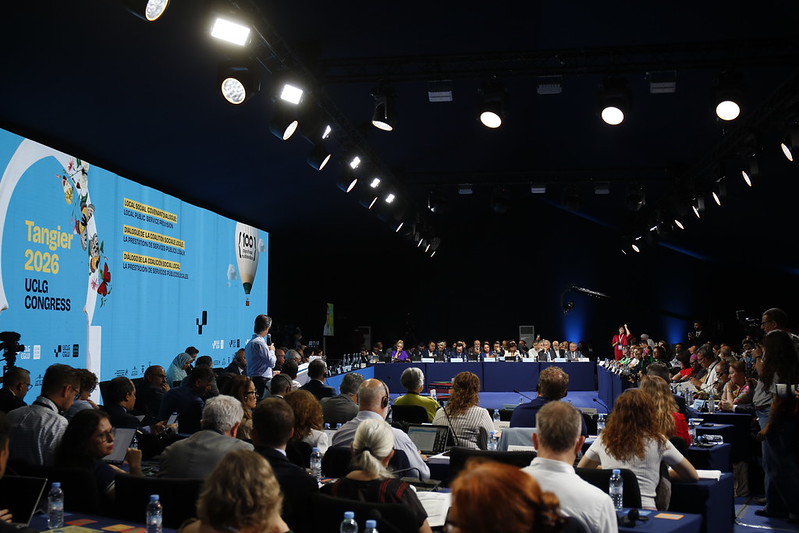
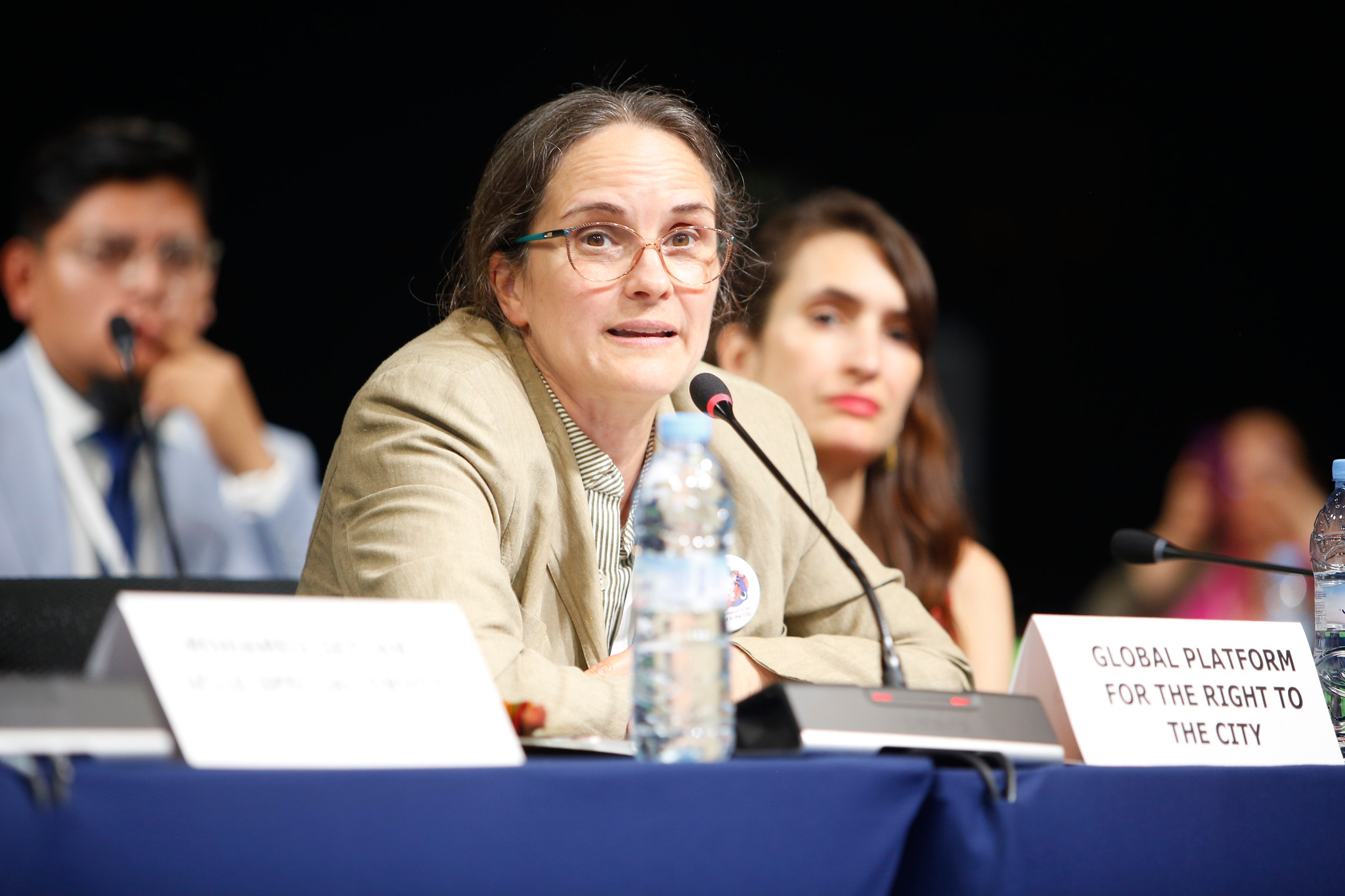
The Global Platform for the Right to the City (GPR2C) actively participated in the UCLG World Congress of Local and Regional Governments, held in Tangier, Morocco, from 22 to 25 June 2026.
Convened by United Cities and Local Governments (UCLG) under the theme “A New Generation of Universal Local Public Services”, the Congress brought together local and regional governments, civil society organisations, community-based organisations, international institutions, academia and global networks.
For the Global Platform, Tangier was an important milestone in a long-standing collaboration with UCLG and a key moment for advancing a renewed political agenda rooted in human rights, care, equality, democratic participation and the commons.
From the Local Social Covenant process to the Tangier Commitment
A central political process leading up to the Congress was the Local Social Covenant, through which UCLG and its partners engaged in a structured dialogue to define renewed priorities and political commitments from the local and territorial level.
The process brought together local and regional governments, organised civil society and other partners around eight interconnected thematic areas:
- Housing
- Transformative Local Finance
- Food Systems
- Public Health
- Climate Justice
- Culture
- Local Conflict Prevention
- New Essentials
These areas were approached through the transversal principles of care, anti-racism and youth participation, reflecting an ambition to place dignity, equality, rights and democratic participation at the centre of local action.
The Local Social Covenant process culminated at the Tangier Congress. Its political commitments were reflected in the Tangier Outcome Document — A New Generation of Universal Local Public Services, which established the Tangier Commitment and a renewed Local Social Covenant as a political framework for the years ahead.
👉 Read the Tangier Outcome Document
The political document places universal local public services at the centre of a renewed social agenda, while highlighting priorities including housing justice, the New Essentials, climate justice, democratic local finance, gender equality, human rights, international solidarity and youth participation.
GPR2C and the “New Essentials”
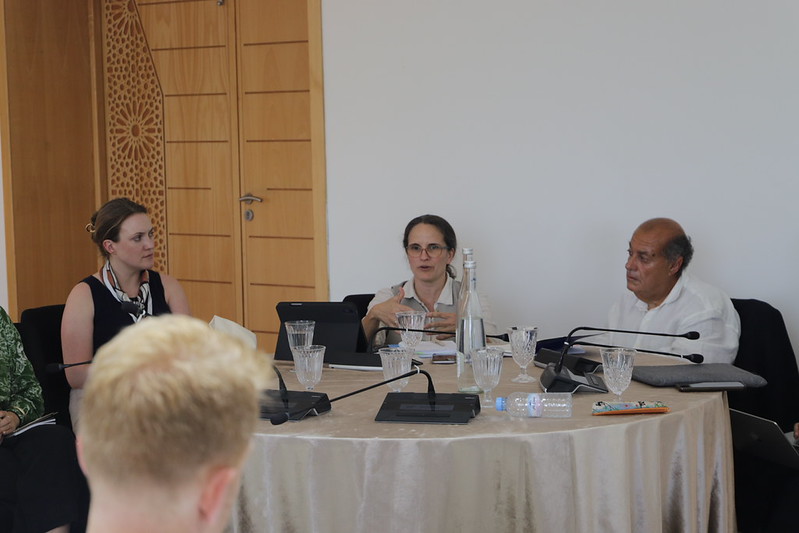
The Global Platform for the Right to the City contributed to this process by facilitating the debate around the “New Essentials”, one of the eight pillars of the Local Social Covenant.
The New Essentials agenda opens a discussion about what is essential for sustaining life and guaranteeing dignity in cities and territories. It connects everyday needs and universal public services with rights, care, equality and the democratic governance of common goods.
The Tangier discussions highlighted the need to move beyond a narrow understanding of basic services and to recognise issues such as care, housing, food, health, energy, transportation, public spaces, digital rights, culture and other conditions for a dignified life as central dimensions of local public action.
For the GPR2C, this agenda is closely connected to the Right to the City: the right of all inhabitants, present and future, to live with dignity, equality and justice and to participate meaningfully in shaping the territories in which they live.
GOLD VII: Economies of Equality and Care
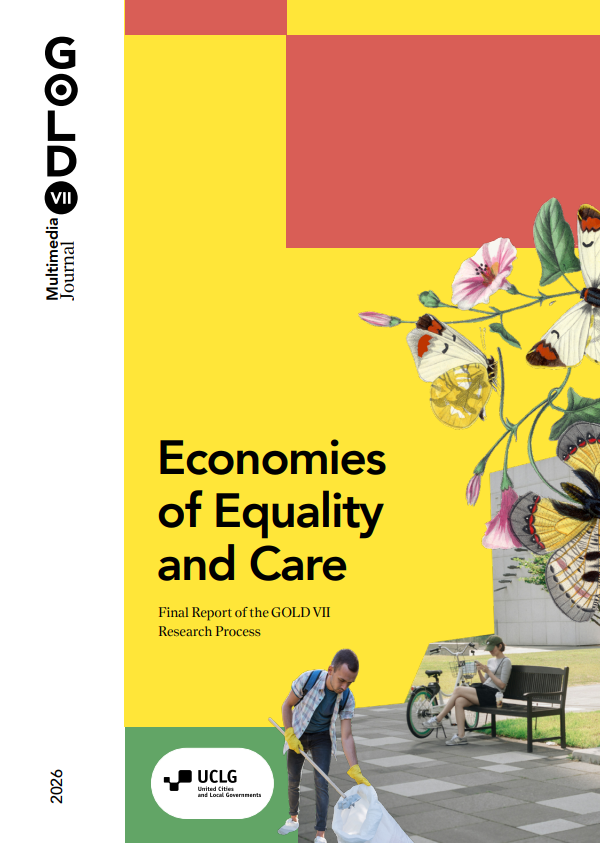
The Tangier Congress also marked the culmination of the GOLD VII research process, with the launch of the GOLD VII Report on Economies of Equality and Care.
The GPR2C contributed to this process, including through work highlighting the importance of care infrastructure and public-community partnerships, as well as the central role of care in building a renewed, plural and community-driven multilateral system.
The report places care and equality at the centre of debates on the future of cities and territories, einforcings the importance of local and regional governments in building public policies and services that sustain life.
From the Right to the City to a renewed social pact
The Local Social Covenant provides an important framework for strengthening collaboration between local governments and civil society.
From the perspective of the Global Platform, public-community partnerships are key to moving forward. Experiences from different parts of the world demonstrate the potential of collaboration between local and regional governments and civil society organisations to guarantee universal and affordable public services, protect the commons and advance social and climate justice.
This requires enabling legal and institutional frameworks, adequate public financing and procurement mechanisms, as well as recognition of the role played by community organisations, social movements and the social and solidarity economy in sustaining everyday life.
The Congress also demonstrated the importance of maintaining structured spaces for dialogue between local and regional governments, grassroots organisations, NGOs, professionals and academia. Such spaces can help ensure that the Local Social Covenant develops beyond a political commitment into a framework for ongoing collaboration, experimentation, learning and accountability.
Territories that care: Right to the City and solidarity economies for sustaining life
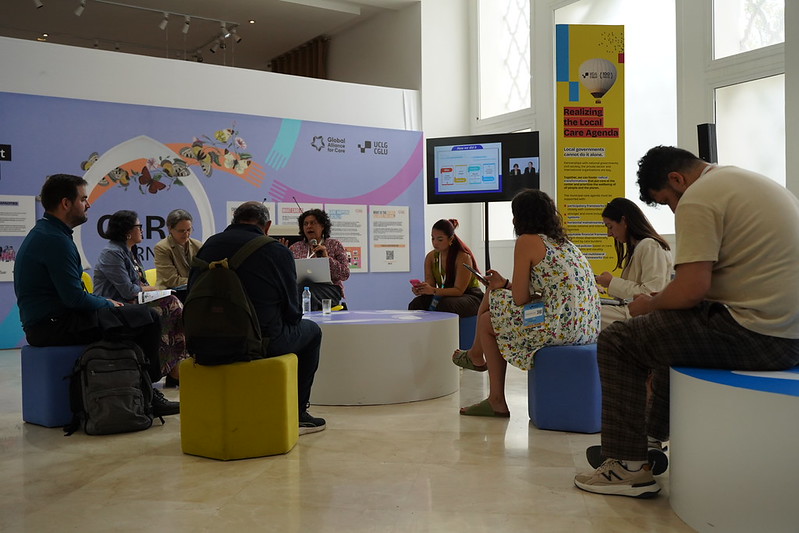
The GPR2C also co-organised an event with the Intercontinental Network for the Promotion of the Social Solidarity Economy (RIPESS), bringing together perspectives on the right to the city, care and the social and solidarity economy.
The conversation took place within the Care Corner, a space promoted by the Global Alliance for Care and UCLG to foster exchange and reflection on the construction of caring societies and cities.
The discussion explored how care can be understood simultaneously as a human right, a dimension of the right to the city and a pillar of the social and solidarity economy.
It built on the concepts of caring societies and comprehensive care systems, recognising the rights to care, to be cared for and to self-care, and the shared responsibilities of public institutions, communities and society as a whole.
The conversation also highlighted the contribution of community-based initiatives and solidarity economies to sustaining life, strengthening territorial resilience and building more democratic, inclusive and just cities.
Voices from Tangier: Lorena Zárate in Municipal Times
The GPR2C’s engagement with the Local Social Covenant and the Tangier Congress was also reflected in an interview with Lorena Zárate, Co-Coordinator of the Global Platform for the Right to the City, published by Municipal Times following the Congress.
In the interview, Zárate reflected on the significance of the Local Social Covenant as both a point of arrival and a point of departure, highlighting the importance of public-community partnerships, structured dialogue between local governments and civil society, and stronger mechanisms for collaboration beyond the Congress.
She also underlined the potential of the International Public-Community Council on Everyday Essentials as a space to connect municipal experimentation and collective learning with global mobilisation and advocacy.
👉 Read “Delivering the Local Social Covenant” by Lorena Zárate in Municipal Times
A new Global Charter-Agenda for Human Rights in the City
A major outcome of the Tangier Congress was the adoption of the New Global Charter-Agenda for Human Rights in the City, on 25 June 2026. Developed through a broad international process initiated in 2022 by UCLG and its Committee on Social Inclusion, Participatory Democracy and Human Rights (CISDPDH), the new Charter-Agenda brings together the contributions of local and regional governments, civil society organisations, academia, international institutions and networks working on human rights and the Right to the City.
The GPR2C played an active role throughout the drafting and revision process, participating in the international steering committee alongside local governments, experts and partner organisations. This process provided an opportunity to reflect on the evolution of the human rights agenda at the local level and on the growing recognition of cities and territories as key spaces for making rights a reality.
The new Charter-Agenda recognises 37 human rights, organised into seven thematic clusters, covering essential services and social rights, participatory democracy, climate justice, and cultural, economic and environmental rights. It also introduces an eighth cluster on the Rights of Cities, addressing the political, financial and institutional conditions that local governments need in order to fulfil their human rights responsibilities.
For the GPR2C, one of the most significant advances is the consolidation of the Right to the City as a structural framework for a new generation of rights, while bringing together approaches such as Caring Territories, the City of the Commons, Feminist Municipalism and Intergenerational Equity.
The adoption of the Charter-Agenda therefore represents not only an important milestone for the global Human Rights Cities movement, but also a practical reference for local governments, social movements and civil society organisations seeking to translate human rights, equality and spatial justice into concrete policies and practices in cities and territories.