
GPR2C Summary of 2025: Towards a global mutirão and caring cities!
Dear friends,
2025 was marked by the intensification of the work of the Global Platform for the Right to the City (GPR2C) on two strategic fronts: Climate Justice and Care. With great expectations from social movements, the year unfolded around preparations for our participation in COP30, hosted in Brazil for the first time. In addition, the GPR2C made significant progress on the axis of “Diverse Economies, Care and Cities of Solidarity”, culminating in the publication of fundamental research on care infrastructures. The mobilization and coordination achieved demonstrated the potential of the Right to the City as a transformative framework for Climate Justice and Caring Cities. Here’s a recap of our main actions this year.
🌳 COP30 recap
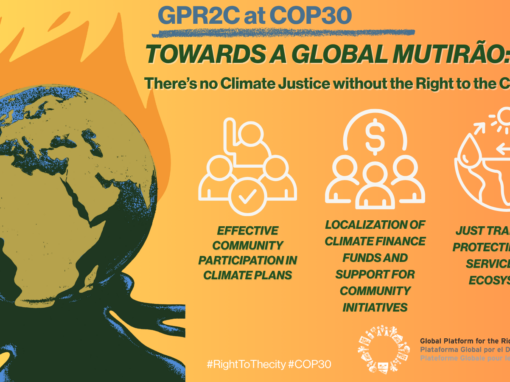
Held in Belém do Pará from November 10 to 21, this was the first climate conference to be held in Brazil and in the Amazon. GPR2C took the vision that “there is no Climate Justice without the Right to the City” and advocated for building a multi-actor, multi-level community-led partnership for climate action. Our key messages focused on empowering community participation in mitigation and adaptation plans, localizing climate finance and promoting a just transition that protects basic services and ecosystems.
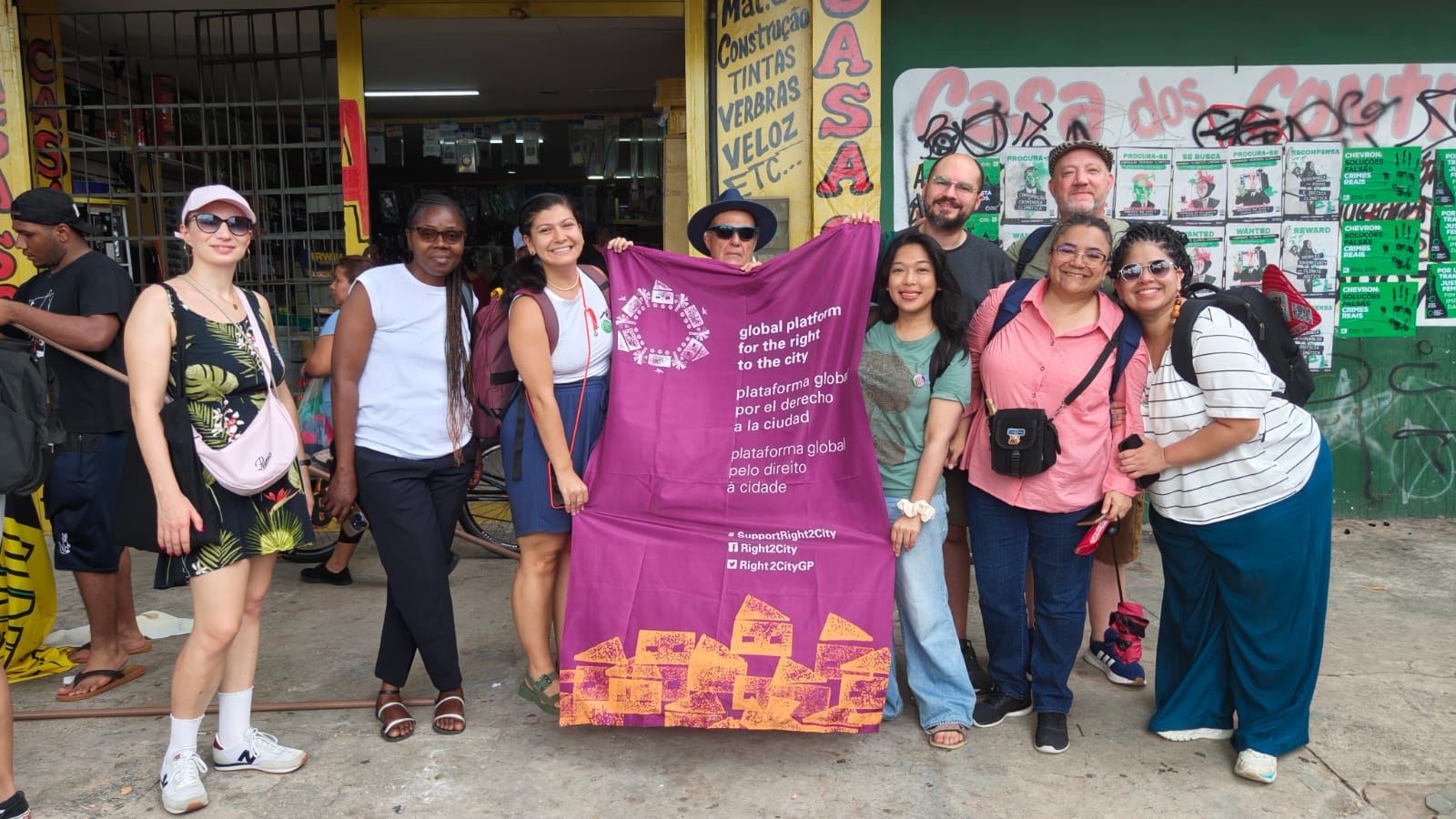
In terms of advocacy, the GPR2C organized and participated in several events, including an Urban Plenary at the NGO House, an Official Side Event at the Blue Zone, a panel at the People’s Summit and active participation in the unified Global March for climate action.
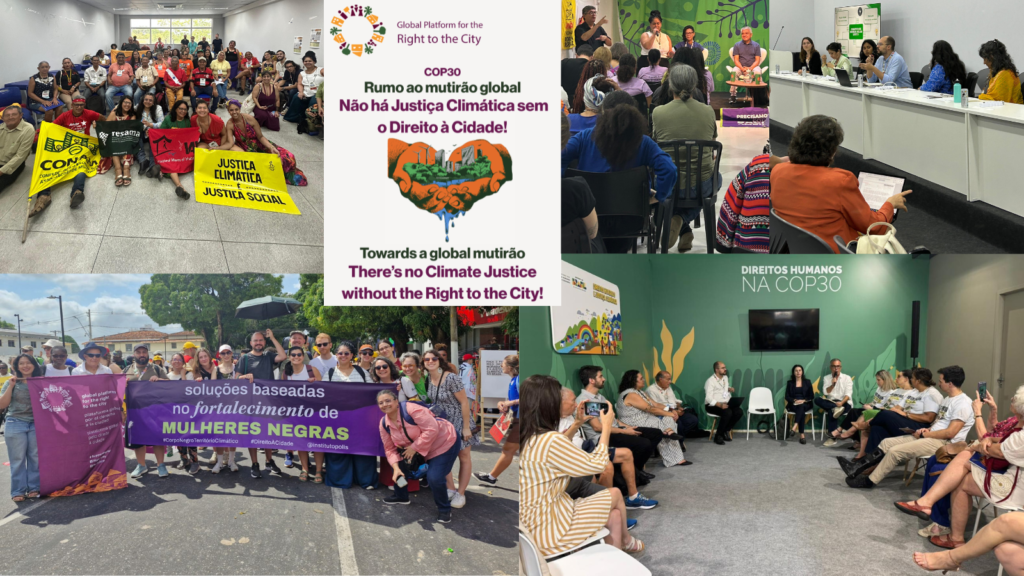
Despite the visibility of the issue of cities in different events, including a ministerial meeting, the final COP30 agreement did not present any significant innovations in the urban dimension. However, we celebrate advances such as the agreement to develop the Belém Action Mechanism (BAM) for Just Transition, the first instrument to formally recognize the role of frontline communities. Negotiations on the Global Goal on Adaption (GGA) resulted in the approval of 59 indicators, placing the issue of adaptation at the center. There was also a historic mention of Afro-descendants and the recognition of women environmental human rights defenders and care work in the Belém Gender Action Plan (GAP).
💻 Our campaign and Position Papers
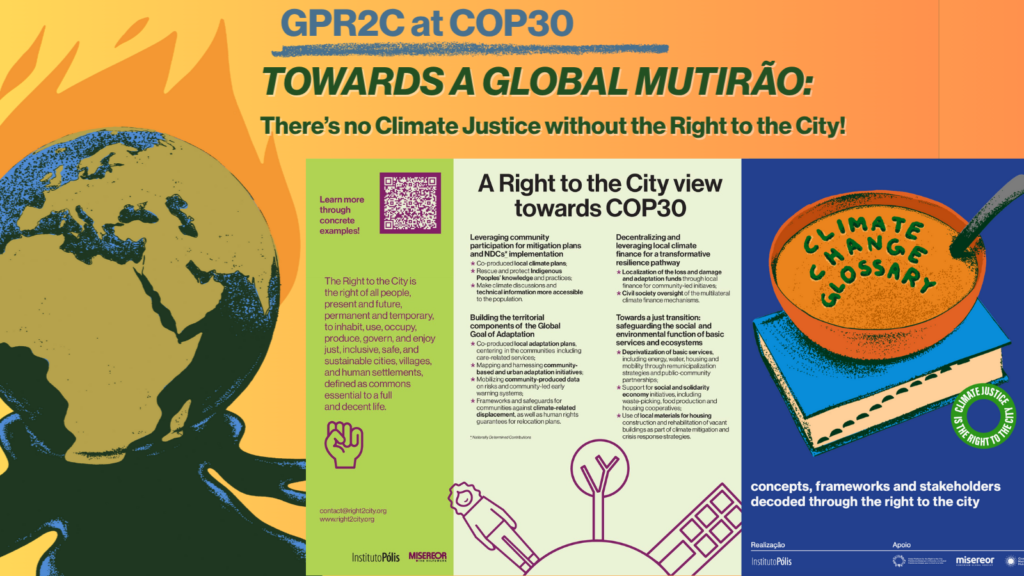
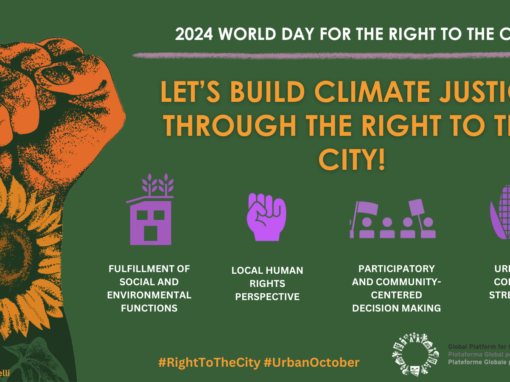
The platform’s efforts towards the conference culminated in the campaign “Towards a Global Mutiny: No Climate Justice without the Right to the City!”. This special page detailed the GPR2C’s campaign at COP30 and served as an access point for key documents. Among the materials highlighted, which seek to facilitate mobilization and advocacy, are the flyer with our full position and the Glossary on Climate Change, which decodes concepts and frameworks for approaching the Right to the City within the scope of Climate Justice. The campaign site has also made available the Latin American Declaration for Climate Justice and the Right to the City, a joint regional position paper drawn up with partners such as HIC-AL, Misereor and IIED-AL.
🛠 Task Force
Since the beginning of 2025, our work on climate justice has intensified, resulting in nine meetings of the Task Force towards COP30. The aim was to strengthen the presence of urban social movements and civil society organizations in the climate debate. The meetings focused on training on how the COPs work and on creating a joint agenda for teh conference and beyond.
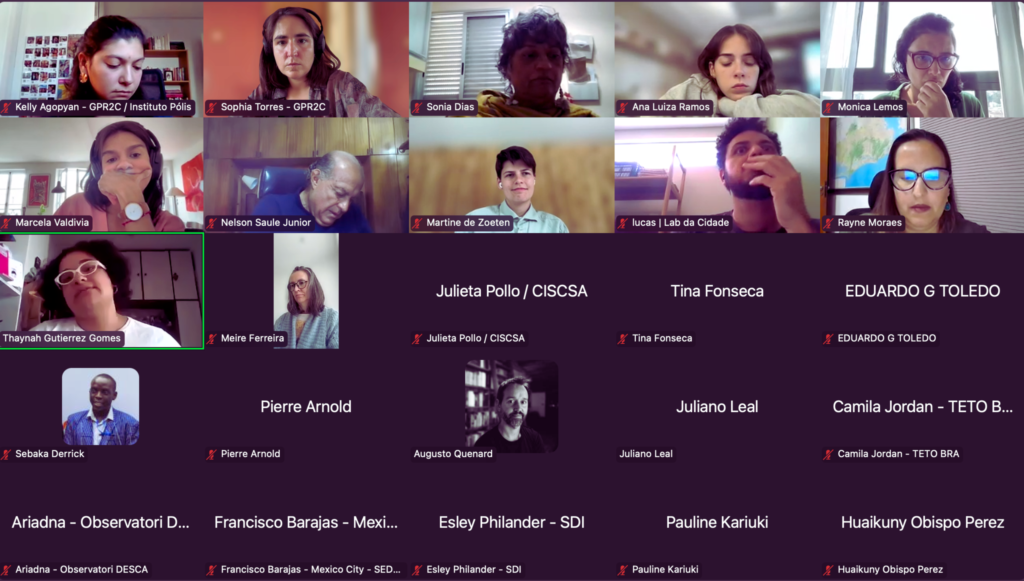
During the Task Force, crucial strategies were identified, such as climate finance for cities, co-production of policies and data, and strategic litigation. Between July and October, the sessions delved into the Bonn negotiations, the topic of climate adaptation, the Nationally Determined Contributions (NDCs) and the finalization of the GPR2C position paper for COP30.
💖 Care as Urban Infrastructure
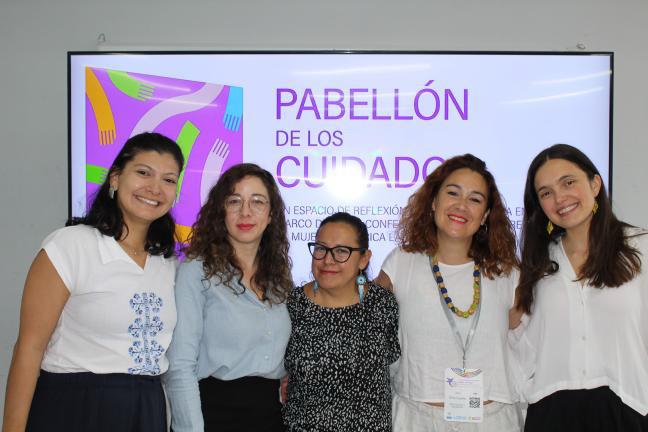
The GPR2C consolidated its work on the theme of Care, seen as a fundamental foundation for well-being and equality, which must be at the heart of urban planning. In 2025, the highlight was the creation of the document resulting from Phase 2 of UCLG’s 7th Global Report on Local Democracy and Decentralization (GOLD VII), entitled “Co-Creating Caring Cities through Public-Community Partnerships“.
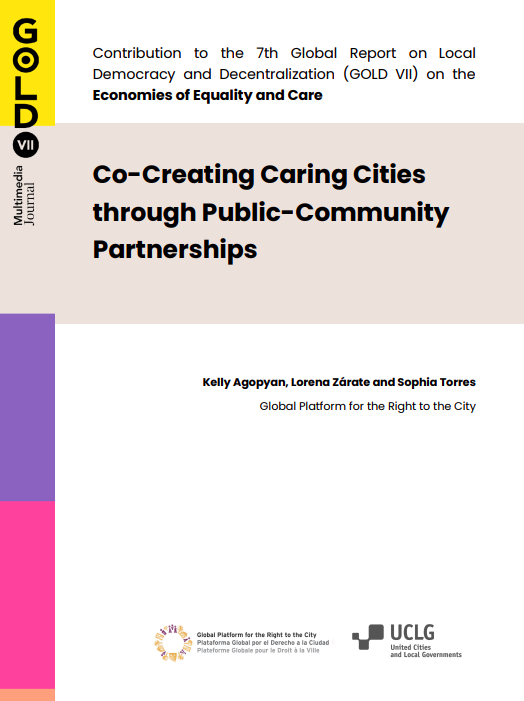 The text argues that care should be understood as urban infrastructure, encompassing both physical dimensions (public spaces, health centers) and intangible ones (networks, partnerships and policies). This approach criticizes profit-oriented urban planning and advocates a reorganization based on principles of care and solidarity, prioritizing people and nature.
In addition, in 2025, the report resulting from the GPR2C and Ripess contribution on the human rights dimension of care was submitted to the UN Human Rights Council (OHCHR), seeking to consolidate recognition of the right to care.
🚀 Expectations for 2026
The preparatory process for COP30 was a strategic decision that strengthened our articulation and positioned us as a network that can broaden the connection between the Right to the City and Climate Justice. In 2026, it is crucial to strengthen this movement in order to consolidate cities at the heart of climate action.
Our priorities for the coming year include monitoring and advocating against GGA indicator 7b, which suggests the removal of populations from risk areas, advocating for better housing conditions and urban infrastructure. We will also take advantage of the 13th World Urban Forum (WUF 13) in May 2026 to debate the shortcomings and progress in implementation of the New Urban Agenda (NUA), centrally incorporating climate justice and caring cities priorities.
On the care axis, the GPR2C’s work on Phase 3 of GOLD VII (Resources and Reforms) will be combined with the facilitation of the Town Hall on Essential Services for Everyday Life as part of the preparatory process for the UCLG World Congress in 2026, seeking the incorporation of Care as a New Essential Service and a human right in the Local Social Convenant that will result from it.
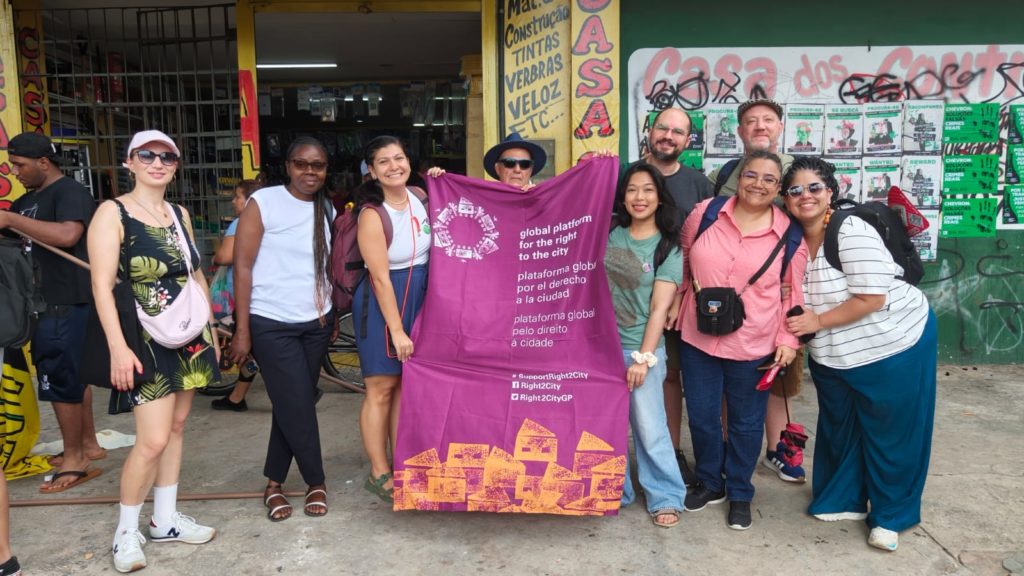
Our sincere gratitude for your renewed support this year and our best wishes for 2026. The Right to the City, by recognizing structural inequalities, remains our essential lens for addressing the climate and social crisis. In the coming year, we will continue this journey to ensure that cities are more just, democratic, sustainable and caring. Let’s keep going!
Henrique, Kelly, Lorena and Nelson
GPR2C team