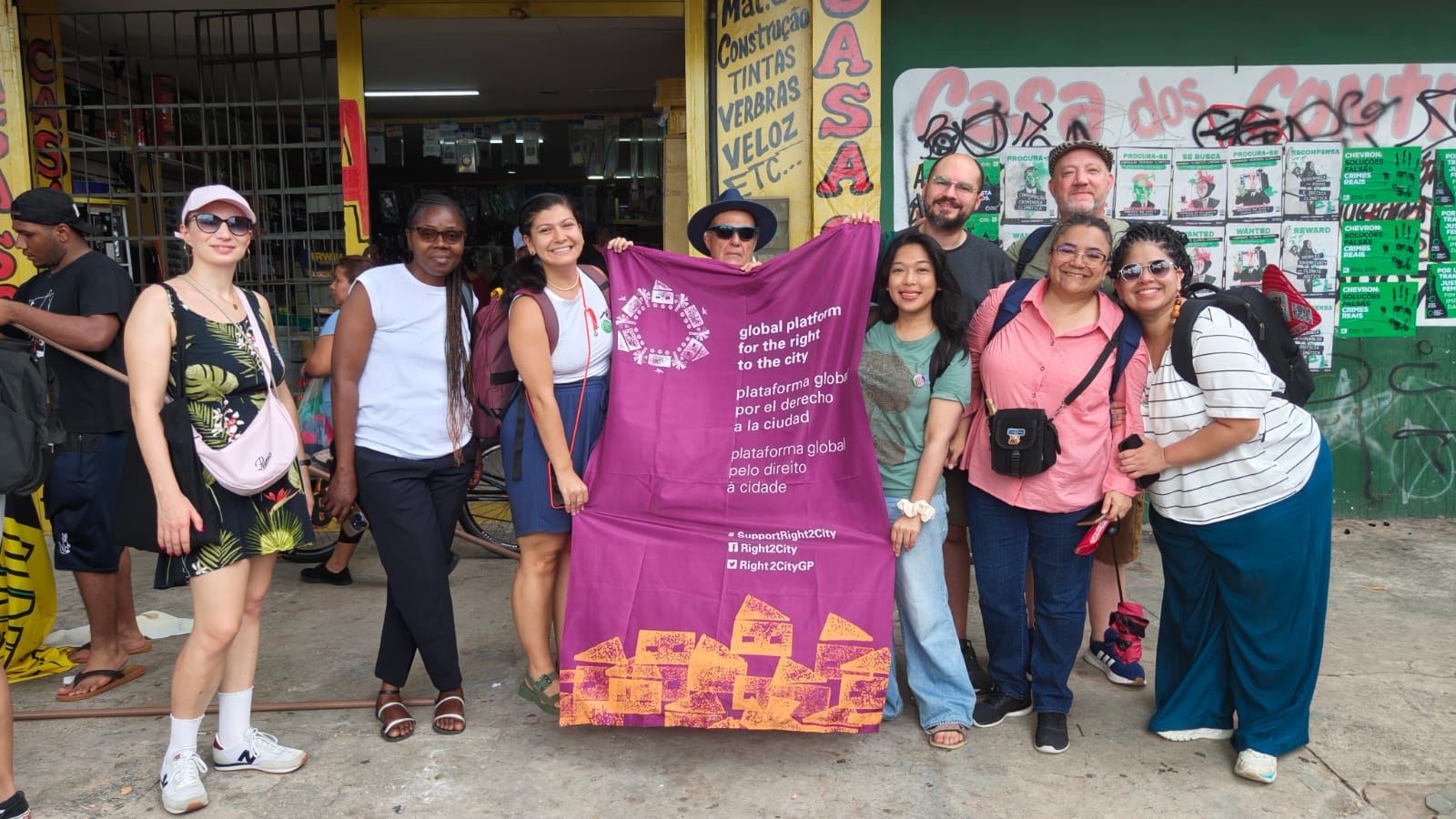

The GPR2C has defined “Care” as one of its strategic priorities for action in the period from 2023 to 2026. For the municipal movement, care is much more than just social policy, it is part of a fundamental political vision to transform the way we govern, plan and live together. Care is recognized as the foundation that sustains life, well-being and equality and must therefore be at the heart of urban planning and local public policies.
Recognition of the relevance of care, both as work and as a right, is growing, driven by global mobilization, especially led by feminists. Our work focuses on the need to implement “systems of care” that see care as a universal right, based on social and gender co-responsibility.
Such systems must deal with structural inequalities (of gender, race, class, territory, migratory status, among others) in the perception and distribution of care work. The central challenge is to overcome the false division between productive and reproductive work, which has historically made care invisible in the social and political imagination.
GPR2C and its partners have emphasized the importance of a feminist and solidarity-based approach to urban planning that focuses on reducing structural and territorial inequities. Considering care as an essential service is crucial to moving towards truly just and democratic societies for all.
In April 2024, the Intercontinental Network for the Promotion of the Social and Solidarity Economy (Ripess) and the GPR2C responded to the call for contributions for a comprehensive thematic study on the human rights dimension of care and support, organized by the Office of the United Nations High Commissioner for Human Rights (OHCHR). Our contribution provides comprehensive answers to questions on recognition of care, policies and concrete measures from the level of territories, as well as the challenges and production of disaggregated data.
The report resulting from this process was submitted to the Human Rights Council in 2025, seeking to consolidate the recognition of the right to care and the rights of caregivers. The text identifies good practices and challenges in care systems around the world, as well as presenting recommendations for governments, civil society and international organizations to guarantee universal and equitable access to care services.
Highlight of 2025: participation in the 7th Report of the Global Observatory on Local Democracy and Decentralization (GOLD VII)
The GPR2C was invited to take part in the process of preparing the 7th report of the Global Observatory on Local Democracy and Decentralization (GOLD VII), of the United Cities and Local Governments (UCLG) network, whose guiding theme is “Economies of Equality and Care”.
The process was divided into three phases:
Phase 1: Care as Aspiration and Inspiration (July 2024 – February 2025)
This stage focused on conceptualizing care in order to discover common values that could serve as a basis for building shared care systems. Key themes such as health, security, economy, participatory budgeting, culture, gender inequality and urban planning were part of the wide-ranging investigation carried out by more than 15 representatives from municipal governments, civil society organizations and academia. Among the conclusions is that caring cities and territories are fairer, more democratic and more sustainable.
Phase 2: The Infrastructure Needed for Caring Cities and Regions (February 2025 – September 2025)
The focus was on the structures needed to support the care agenda. The report detailed the concept of “care infrastructure”, which should be understood broadly, encompassing hard (physical) infrastructure, such as public spaces, social/health centers and service networks; and intangible (social and governance) infrastructure, including networks, partnerships and institutional mechanisms, such as public policies and programs, as well as the financial instruments needed to put all this into practice.
By incorporating physical and intangible infrastructures into the discussion, GOLD VII promotes an integrated approach to care. Among the topics investigated by more than 20 partner organizations are youth infrastructure, urban planning, time policies, health, basic sanitation, housing, economy, popular restaurants, climate policy, education, work and migration.
The aim was to focus on the capacity of LRGs to develop urban infrastructure aimed at socio-spatial justice, as well as highlighting the importance of Public-Community Partnerships (PPCs) in co-creating caring cities. Recommendations for public authorities include: establishing care as a cross-cutting lens and creating connections with broader agendas; recognizing, strengthening and supporting existing care actions; experimenting with pilot initiatives; using local knowledge to identify gaps and evaluate the impact of public care policies.
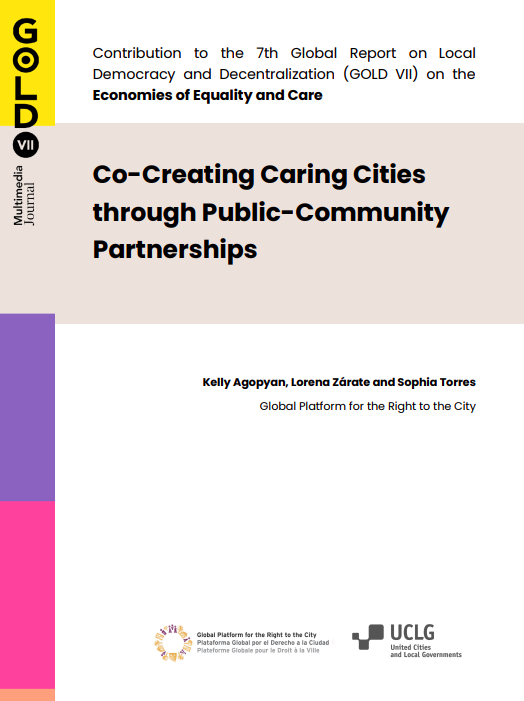
The GPR2C contributed to this phase by preparing a document entitled “Co-Creating Caring Cities through Public-Community Partnerships“.
The text, written by Kelly Agopyan, Lorena Zárate and Sophia Torres, argues that care – individual, community and for the environment – should be understood as urban infrastructure. This infrastructure goes beyond physical terms (such as roads or buildings), also encompassing symbolic, political and social dimensions. The “infrastructure of care” is defined broadly, including public and private spaces, services, community practices, knowledge, policies and narratives – everything that enables and facilitates collective and social care.
 This approach criticizes the dominant urban paradigm, oriented towards profit and functionality, which tends to ignore or hinder the activities of care and social reproduction. Instead, it advocates for an urban reorganization inspired by principles of care, solidarity, collaboration and well-being, prioritizing people and ecological processes over market interests.
The publication demonstrates how local governments can transform the provision of care, which still places a compulsory burden on women and families, into a collective and public responsibility through the construction of these infrastructures. Among the recommendations for the public sector is the recognition, protection and support of the infrastructure and dynamics of community care, with a view to carrying out and strengthening actions that are the result of public-community partnerships.
The text details a wide range of initiatives that make up care infrastructures, ensuring that this is not an isolated service, but a vast network of connections and support. Among the case studies of public-community partnerships highlighted around the world, we look at:
- Makola Market – Accra (Ghana): a childcare initiative for informal market workers, the result of organized women’s quest to create a childcare service suited to their needs and working dynamics.
- Mulheres do GAU (Urban Agriculture Group) – São Paulo (Brazil): an urban agriculture collective that has transformed a degraded space into a community garden, the Viveiro Escola, contributing to the community’s food security and the economic autonomy of vulnerable and peripheral women.
- Community welfare homes (Colombia): the state childcare program Hogares Comunitarios de Bienestar (HCB) is based on formally hiring “community mothers” to provide care for children under 5, guaranteeing essential services with community participation.
- Local Water Committee – Djougou (Benin): the Municipal Council established a community committee focused on the integral and collective management of a dam to meet local, economic and ecological needs after a period of drought.
These experiences outline a roadmap for societies that care – for people, the planet and the future. The aim is to ensure that care services are comprehensive and intersectoral, with a view to deprivatizing, de-feminizing and de-familiarizing unpaid care work, which is mostly carried out by women and girls.
Phase 3: Resources and Necessary Reforms (September 2025 – June 2026)
The latest stage will delve into the structural changes and resources essential for Local and Regional Governments (LRGs) to be able to effectively implement the proposals from the previous phases. Among the central themes to be addressed are:
- Rethinking the current global financial system, which is considered inadequate to serve local governments and the efforts of their communities.
- Continued renewal of the multilateral system – a theme that will be the focus of GPR2C’s contribution
- The political capital needed to implement care initiatives.
- The strengthening of partnerships with different actors.
- The governance structure in which the GRLs operate, which can be a resource or a constraint for the promotion of caring cities and regions.
Continuity and Political Agenda 2025-2026
- Care as a New Essential Service (2026):
In addition to delivering the last phase of GOLD VII, GPR2C is also engaged in the process of debating UCLG’s “Town Halls”, which began in 2025, and will culminate in 2026 with the UCLG World Congress in June. The proposal is to enable a broad public discussion dedicated to the “New Essential Services”. The aim is to deepen understanding of the local provision of essential services, including care as a human right and common good, alongside housing, water, energy, health, education and connectivity. The right to care is essential to guaranteeing multiple human rights, such as equality and labor rights, and cannot be fully realized without adequately guaranteeing the right to care itself. Local governments have a strategic role to play in integrating care as a guideline for urban policies and promoting collaborative governance.
- Local Social Covenant: the previous discussion aims, as a political outcome, to enrich the Local Social Covenant – proposed and mobilized also in the scope of UCLG – with ambitious commitments, among which the GPR2C emphasizes:
- The need for a feminist and caring approach to urban planning, focused on reducing structural inequities.
- The recognition of essential services as common goods and human rights.
- The role of public-community partnerships in expanding access to these services, recognizing the weakened “social fabric” that needs to be sustained by a New Social Pact.
Regional Conference on Women
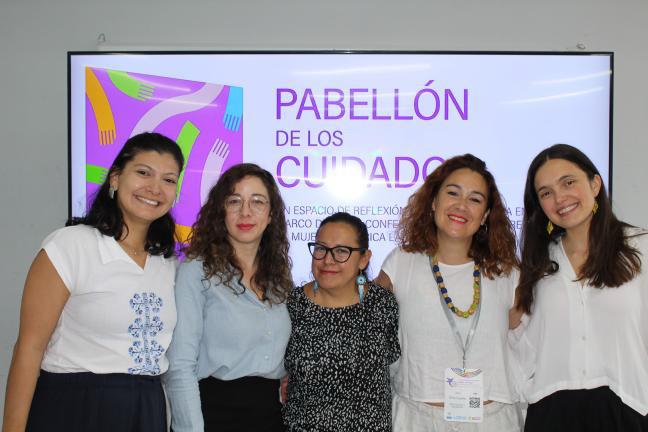
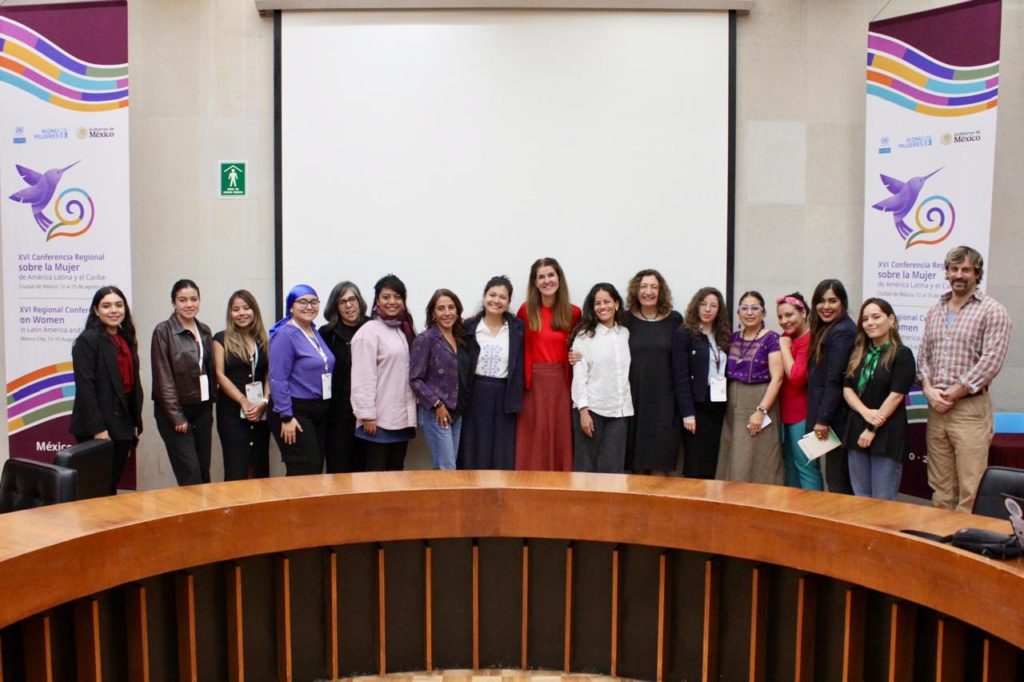
Between August 12 and 15, 2025, we took part in the 16th Regional Conference on Women in Latin America and the Caribbean, held in Mexico City. The GPR2C organized two activities with the General Department for International Relations and Cooperation in Mexico City:
1- A side event approved in the event’s official program, entitled “Towards cities and territories of care: strengthening policies, infrastructures and community care networks”.
The activity sought to address the right to care connected to the right to the city, starting from territories and community experiences. The following participated in the event: Kelly Agopyan, Officer at the GPR2C and the Polis Institute; Ana Falú, Executive Director of CISCSA (Argentina) and the Latin America Women and Habitat Network; Amanda Flety, General Director of International Relations and Cooperation of Mexico City, and Fernanda Lonardoni, Head of the UN-Habitat Office for Mexico, Cuba and Central America.
2 – Event at the Care Pavilion, space convened by the Global Alliance for Care, entitled “Community and territorial approach to care in local public policies”
This event aimed to address the role of the community in providing care and guaranteeing the right to care for those who need it most, from an intersectional perspective of gender, race, class and territory.
Participated in the event: Kelly Agopyan, Officer to the GPR2C and the Polis Institute, Amanda Flety, General Director of International Relations and Cooperation of Mexico City, Laura Pérez Castaño, care specialist at UN-Women and Nancy Marlene Núñez Reséndiz, Mayor (Alcadesa) of Azcapotzalco in Mexico City.