
Baku, Azerbaijan | 17–22 May 2026
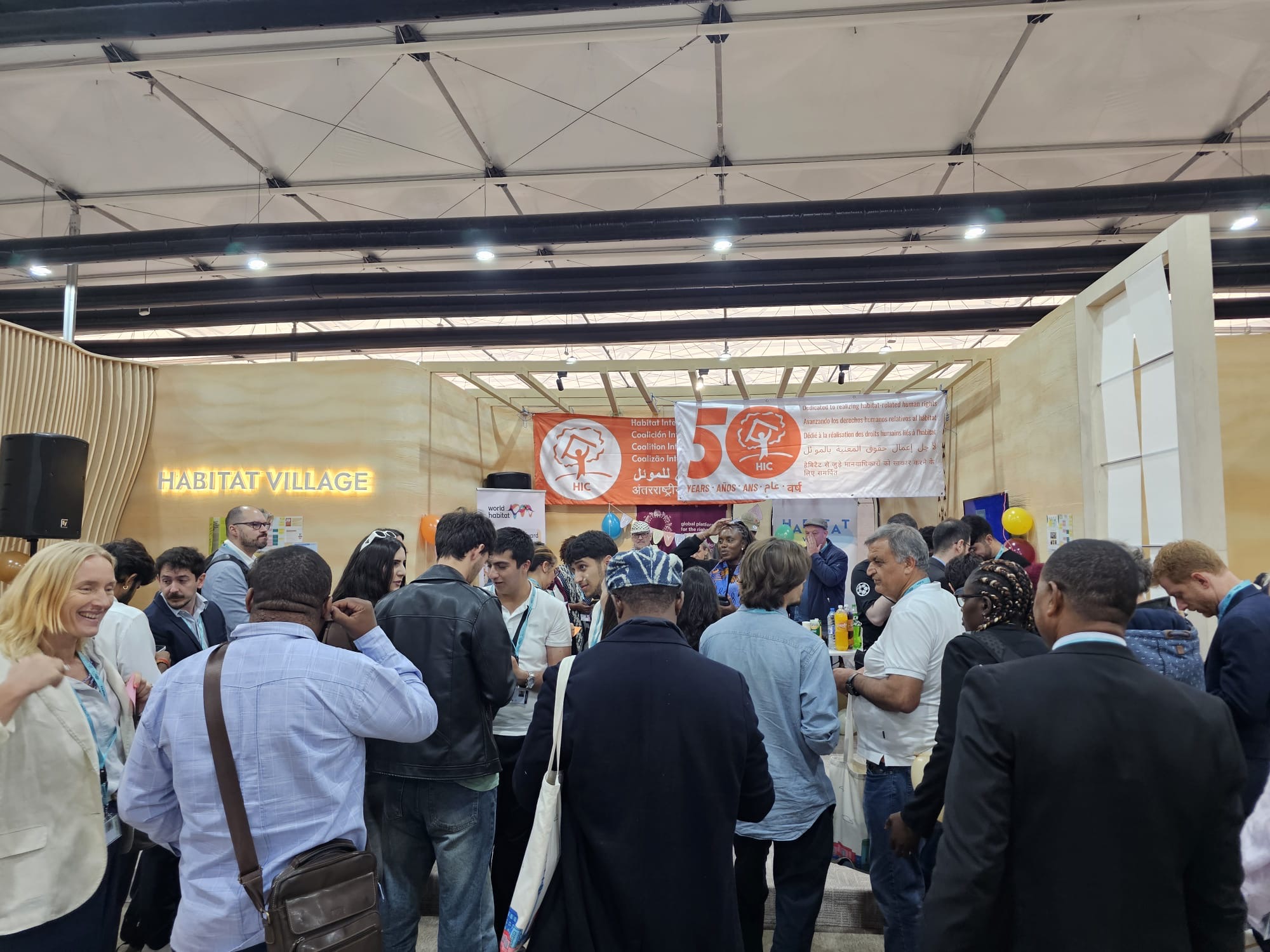
As in previous editions, the Global Platform for the Right to the City (GPR2C) and its members played an active role in the 13th World Urban Forum (WUF13), held in Baku, Azerbaijan. As the main multi-stakeholder dialogue platform promoted by UN-Habitat, the Forum brought together governments, local authorities, civil society organisations, social movements, academia and other stakeholders committed to building fairer, more inclusive and sustainable cities.
Although the World Urban Forum is not a forum for formal political negotiation, its main outcome was the adoption of the Baku Declaration (Baku Call to Action), which sets out the priorities and recommendations expressed by the various participating groups. These include long-standing demands championed by social movements and civil society organisations, such as the recognition of housing as a human right, the prevention of forced evictions and the need to curb the speculative financialisation of housing and land.
The declaration calls on States to move from commitments to effective implementation, reaffirming the social and ecological function of housing and land, strengthening accountability mechanisms and supporting community-led initiatives to build a just and resilient urban agenda in the face of the climate crisis. In the year marking the tenth anniversary of the New Urban Agenda (NUA), the Baku Declaration also urges Member States to accelerate its implementation and to reinforce the catalytic role of UN-Habitat in responding to the global housing crisis.
Ten years on from the New Urban Agenda: a necessary assessment
WUF13 coincided with a key moment to assess the progress and challenges of the New Urban Agenda, adopted in 2016 during the Habitat III Conference in Quito. Ten years after its adoption and halfway through its implementation timeline, organisations and movements from around the world reiterated the need to accelerate its fulfilment in the face of an ever-deepening global housing and land crisis.
The Global Platform for the Right to the City (GPR2C) actively contributed to this debate, promoting reflection on the implementation of the New Urban Agenda, the right to the city and the contemporary challenges of urban development. The New Urban Agenda reaffirms States’ commitment to preventing arbitrary forced evictions and displacement, recognises the social function of housing and land, and incorporates the vision of the right to the city.
The right to the city is the right of all inhabitants – present and future, permanent and temporary – to inhabit, use, occupy, produce, govern and enjoy cities, towns and human settlements that are just, inclusive, safe and sustainable, defined as common goods essential for a full and decent life.
During the various sessions, meetings and forums for coordination, civil society organisations highlighted several priorities for tackling the structural causes of the housing and land crisis:
- To promote the social production of housing, through institutional recognition and the necessary budgetary support to strengthen community initiatives.
- Preventing and combating forced evictions, by incorporating effective mechanisms for redress and access to justice for affected communities.
- Guaranteeing the social and environmental function of land, by developing concrete tools and policies to ensure their effective implementation.
- Expanding and protecting civic spaces, ensuring the meaningful participation of communities and social organisations in urban decision-making.
- Promoting public-community partnerships, recognising organised communities as legitimate and fundamental actors in developing solutions for territories.
These proposals are directly aligned with the principles of the right to the city, calling for democratic management of territories, socio-spatial justice and the centrality of human rights in urban policies.
The GPR2C’s contribution: The Right to the City, housing and climate action
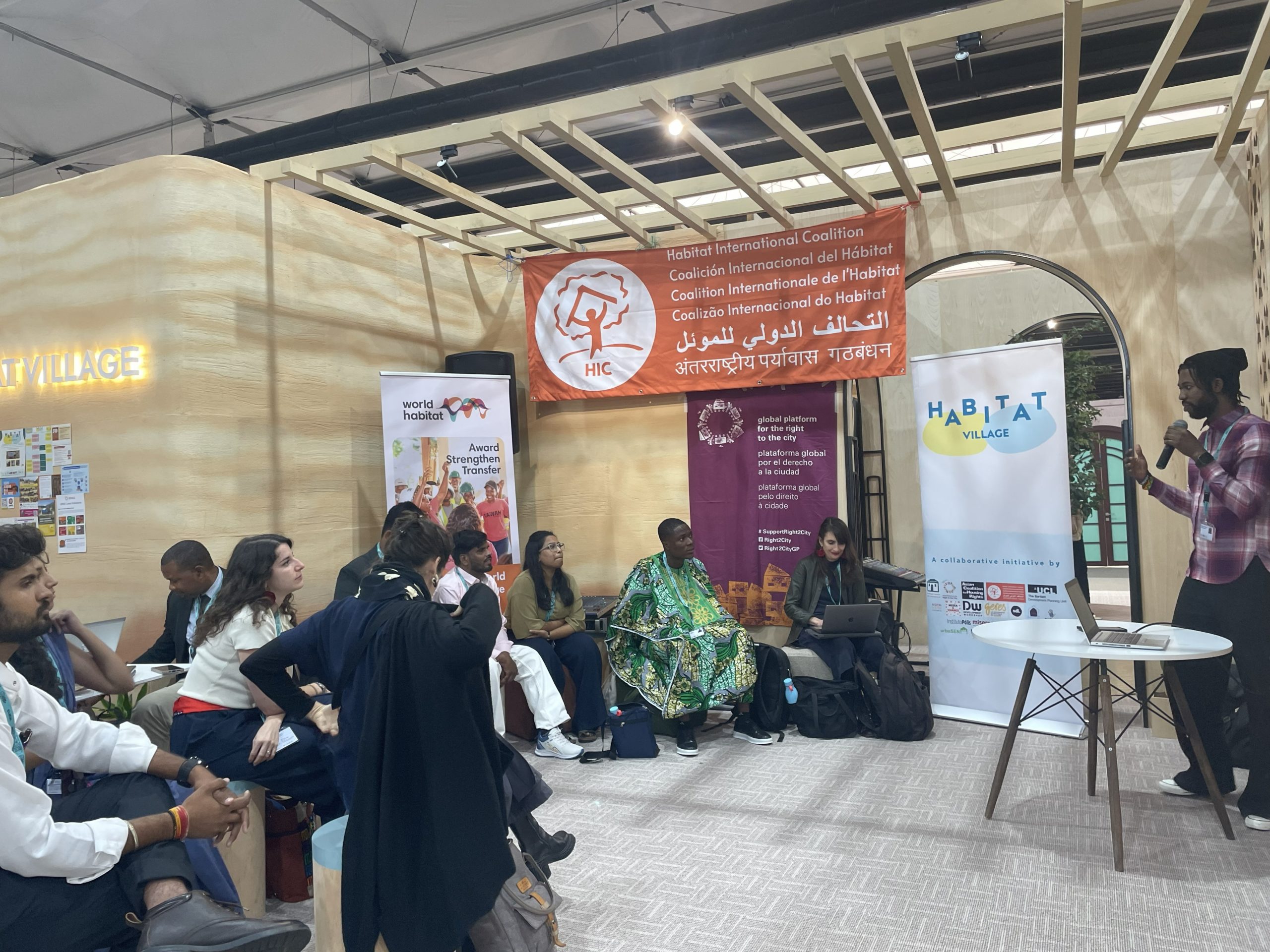
As part of the Forum, the GPR2C organised the networking event “What are we doing with the New Urban Agenda based on the Right to the City and Adequate Housing to Address the Climate Emergency?”, dedicated to analysing how the implementation of the New Urban Agenda, the right to the city and the right to adequate housing can contribute to addressing the climate emergency.
The meeting brought together representatives from governments, civil society organisations and international bodies, including Brazil’s Ministry of Cities, UN-Habitat, United Cities and Local Governments (UCLG), the Habitat International Coalition (HIC) and the Latin American Women and Habitat Network, amongst others.
The discussions highlighted the importance of strengthening multi-stakeholder and multi-level partnerships for the implementation of the New Urban Agenda, identifying policies and actions already developed by national and local governments in collaboration with organised civil society. Furthermore, the need to position the right to the city and the right to adequate housing as fundamental pillars for tackling the impacts of the climate crisis on cities and human settlements was emphasised.
Among the recommendations put forward by the GPR2C were:
- Advancing the implementation of the New Urban Agenda through the effective participation of governments, organised communities, social movements and civil society.
- Strengthening permanent mechanisms for dialogue, co-governance and shared decision-making.
- Promoting urban policies based on human rights, climate justice and the social function of housing and land.
- Fostering partnerships that enable the expansion and consolidation of territorial solutions already developed by the communities.
Civil society and communities as key actors
Throughout the week, numerous organisations presented concrete examples demonstrating communities’ capacity to generate innovative responses to current urban challenges. From initiatives on the social production of habitat to strategies for defending access to housing and land, the discussions highlighted the importance of strengthening permanent mechanisms for participation and co-governance.
The presence of social movements, community networks and human rights organisations highlighted that solutions to urban crises already exist in many areas and that scaling them up requires political will, adequate funding and regulatory frameworks that recognise and strengthen these practices.
A necessary reflection on human rights
The holding of the Forum in Azerbaijan also prompted reflections and concerns amongst participating organisations due to documented reports of human rights violations in the country.
Various stakeholders emphasised the importance of international forums dedicated to urban and human rights upholding robust standards of consistency and accountability, as well as amplifying the voices of local organisations and those affected by rights violations.
The journey continues
The discussions held in Baku reinforce the need to place issues fundamental to the right to the city at the heart of the international agenda: universal access to adequate housing, the prevention of forced evictions and displacement, the social function of land, the social production of habitat, and the effective participation of communities in the development of public policies.
Ten years after the adoption of the New Urban Agenda, the key message emerging from WUF13 is clear: the commitments are already in place, but there is an urgent need to accelerate their implementation. To achieve this, it will be necessary to strengthen cooperation amongst multiple stakeholders, expand democratic spaces for participation, and ensure that urban policies respond to the rights, needs and aspirations of communities.
At the Global Platform for the Right to the City we will continue to drive these debates forward and strengthen the links between social movements, civil society organisations, local governments and international organisations committed to more democratic, inclusive and sustainable cities for all.