
9–20 November 2026 | Antalya, Türkiye
The 31st United Nations Climate Change Conference (COP31) will take place from 9 to 20 November 2026 at the Antalya Expo Center in Türkiye, bringing together governments, international institutions, civil society organisations, social movements and other stakeholders to advance global climate negotiations and action.
Based on COP30 participation and position, the Global Platform for the Right to the City (GPR2C) and its members will be following and contributing to COP31 through different activities, events and advocacy initiatives, bringing urban and territorial perspectives into discussions on climate action.
For the Platform, addressing the climate crisis requires placing people, human rights and social and environmental justice at the centre of public policies. Climate change is not only an environmental challenge: it is also a housing, labour, economic and urban justice issue. Its impacts are unevenly distributed, disproportionately affecting people and communities already experiencing inequalities, precarious living conditions and exclusion from decision-making processes.
The right to the city offers a framework for advancing inclusive, democratic and territorially grounded climate action, connecting climate justice with housing, public services, decent work, gender equality, social protection, participation and the protection of commons.
Bringing the right to the city into climate action
COP31 takes place in the context of the implementation of the Paris Agreement and the follow-up to the first Global Stocktake. The COP31 Presidency’s Action Agenda identifies 10 priority topics structured around the six pillars of the Global Climate Action Agenda, seeking to ensure continuity and alignment with the outcomes of the first Global Stocktake.
Several of these discussions are particularly relevant to the work of the GPR2C and its members:
- Housing and adequate living conditions: Climate impacts such as extreme heat, flooding and displacement threaten housing security and habitability, particularly in informal settlements and among low-income communities.
- Climate-resilient cities and territories: Urban adaptation must guarantee access to essential public services, infrastructure and safe, healthy environments, prioritising communities most exposed to climate risks.
- Just transition and decent work: Workers in the informal economy, including waste pickers and other essential workers, must be recognised and included in climate policies, financing and decision-making.
- Gender and social justice: Climate action must address structural inequalities and recognise women’s contributions, particularly in care work, community organising and local resilience.
- Climate finance and public investment: Resources must reach local governments and communities, supporting rights-based, participatory and publicly accountable solutions.
Through the participation of its members, the Platform seeks to highlight these interconnected dimensions and strengthen the links between global climate commitments and local action.
Events
Members of the Global Platform for the Right to the City will be participating in COP31 through different events, discussions, advocacy activities and knowledge-sharing initiatives.
We invite all GPR2C members to share their participation, activities, events and contributions to COP31 so that we can help amplify their work and perspectives. This page will be regularly updated throughout COP31 to showcase the diversity of initiatives, experiences and voices across the Global Platform for the Right to the City. Please send us your news, resources and event information so we can include them!
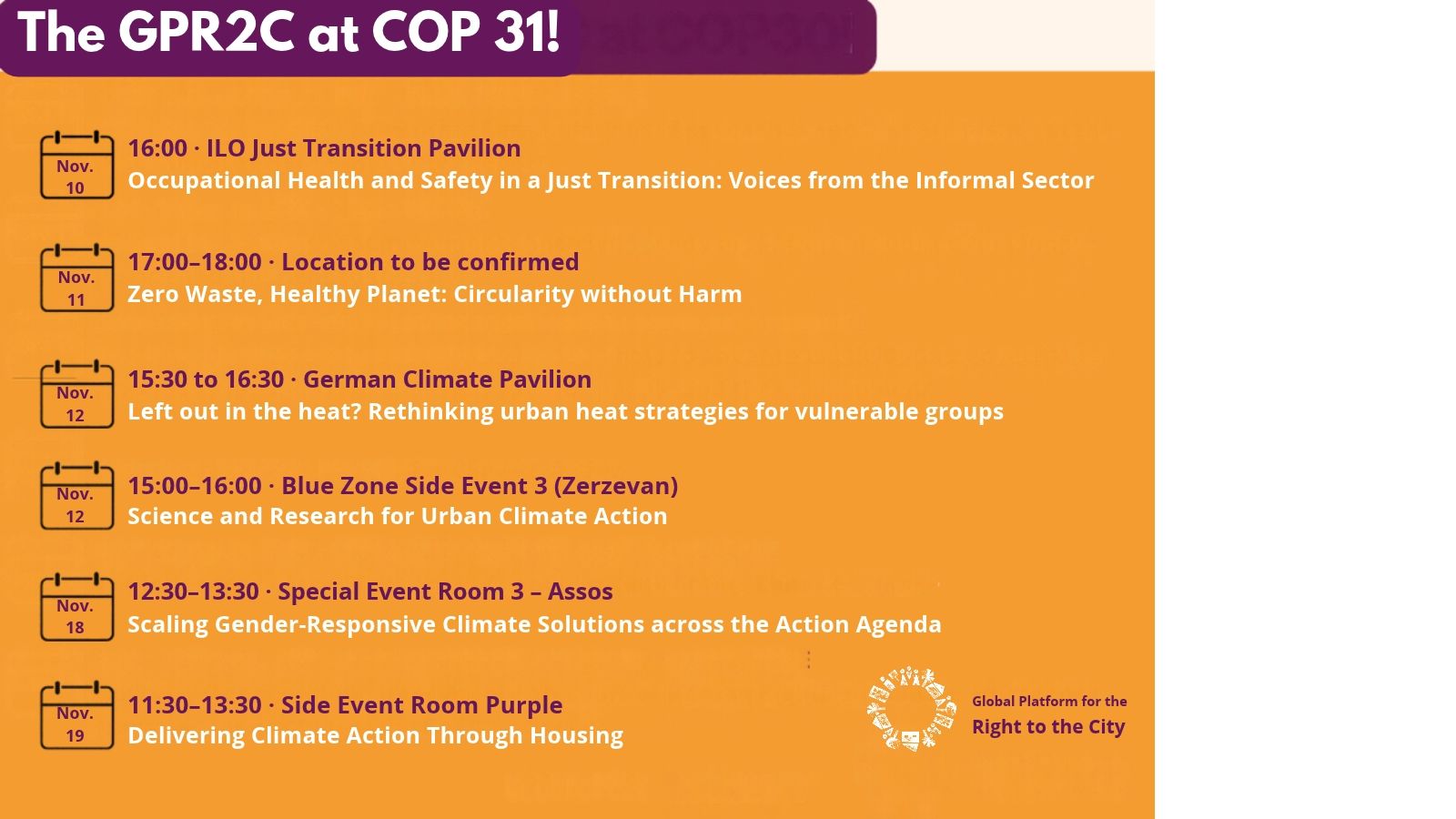
Click on the links for each event for more information.
10 November 2026
Occupational Health and Safety in a Just Transition: Voices from the Informal Sector
-
Time: 16:00 (Antalya time, UTC+3)
-
Location: ILO Just Transition Pavilion
-
Organisers: WIEGO and the International Alliance of Waste Pickers, with contributions from CUT Brazil and StreetNet International.
This session will explore how climate shocks, including extreme heat and flooding, affect the health, safety and livelihoods of workers in the informal economy. Drawing on research and worker-led experiences, the discussion will examine how occupational safety and health can become an integral part of a just transition, ensuring that informal workers are recognised and protected in climate policies.
11 November 2026
Zero Waste, Healthy Planet: Circularity without Harm
-
Time: 17:00–18:00 (Antalya time, UTC+3)
-
Location: To be confirmed
-
Organisers: Zero Waste Europe, the French Solid Waste Partnership and ISWA, in partnership with Health Care Without Harm, the Climate and Clean Air Coalition, ICLEI, the BRS Secretariat, WBCSD and ADEME.
-
WIEGO participation: Sonia Dias, WIEGO Waste Specialist.
This event will explore the links between waste management, public health and climate action through a One Health approach. Discussions will address waste prevention, environmentally sound waste management, the health impacts of plastics and residual waste, and the policies and safeguards needed to develop safe and inclusive circular economy systems. WIEGO’s Sonia Dias will contribute to a panel on reducing the health impacts of waste management.
12 November 2026
Left out in the heat? Rethinking urban heat strategies for vulnerable groups
-
Time: 15:30–16:30 (Antalya time, UTC+3)
-
Location: To be confirmed
-
Participaton: Dan Jones, Depaul International and Robert Robinson Senior Advisor at Partners for Dignity and Rights, Adjunct Professor of Urbanism at the New School.
Extreme heat disproportionately affects people experiencing homelessness, those living in inadequate settlements and other groups facing poverty and social exclusion. This session will bring together people with lived experience, city practitioners, national governments and welfare organisations to discuss how urban heat strategies can better protect those most exposed to climate risks. Contributions will include experiences from Paris and Mannheim, national initiatives in Germany and international examples from Depaul International.
Science and Research for Urban Climate Action: Closing the evidence gap for informal settlements
-
Time: 15:00–16:00 (Antalya time, UTC+3)
-
Location: Blue Zone Side Event 3 (Zerzevan)
-
Conveners: UN-Habitat, the COP31 Presidency, UNFCCC through the Marrakech Partnership for Global Climate Action, and the Climate High-Level Champions, with support from IPCC, GCoM and IIED.
This roundtable will examine how scientific evidence and local and community knowledge can better inform urban climate action, particularly in cities in the Global South. Discussions will focus on strengthening partnerships between governments, researchers, communities and development partners, and identifying the knowledge, tools and financing needed to translate climate research into practical action.
18 November 2026
-
Time: 12:30–13:30 (Antalya time, UTC+3)
-
Location: Special Event Room 3 – Assos (Amphitheatre)
-
Organisers: WIEGO and UN Women, with contributions from ICLEI Africa, Africa Just Transition Network, Brazil’s Ministry of Gender, Brazil’s Ministry of Cities, Brazil’s Ministry of Racial Equality and Asiye eTafuleni.
This session will showcase practical, gender-responsive approaches to climate action, focusing on women working in the informal economy and living in vulnerable communities. It will highlight solutions combining participatory design, decentralised renewable energy, community-based early warning systems and locally led adaptation, while recognising women as leaders, workers and essential actors in building climate resilience.
19 November 2026
Delivering Climate Action Through Housing: Financing Resilient, Low-Carbon Urban Futures
-
Time: 11:30–13:30 (Antalya time, UTC+3)
-
Location: Side Event Room Purple
-
Organisers: Build Change, the Government of France, Habitat for Humanity International and the Lincoln Institute of Land Policy.
-
WIEGO participation: Amira El Halabi, WIEGO’s Climate Justice Specialist.
This session will explore how climate finance and public investment can support resilient, low-carbon and affordable housing. Recognising that extreme heat, flooding and displacement increasingly threaten housing security, particularly in informal settlements, the discussion will examine financing tools for housing improvements, climate-resilient construction and the integration of housing priorities into national and local climate strategies.
Members’ Resources & Contributions
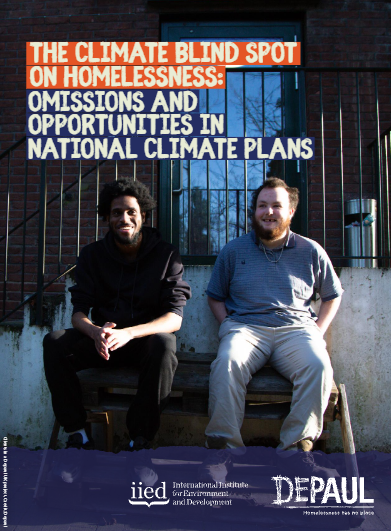
Depaul International & IIED
The Climate Blind Spot on Homelessness: Omissions and Opportunities in National Climate Plans
A report highlighting the absence of homelessness in national climate plans and calling for its recognition as a climate justice issue.
WIEGO
Placing informal workers at the centre of climate action
Key messages on just transition, climate finance, labour rights, gender equality and climate-resilient infrastructure.
Observatori DESCA
Analysis of the climate negotiations, multilateralism, corporate capture and the implications of COP31 for Catalonia and Spain.
The road until here
For several years, the Global Platform for the Right to the City (GPR2C) has been working to strengthen the connections between climate justice and the right to the city, recognising that the climate crisis is also a question of social, economic, spatial and environmental justice.
This collective journey began with the publication of our thematic document on the right to the city and climate justice in 2020, which laid the foundations for further reflection, advocacy and collective action. Since then, we have continued to develop this work alongside our members and allies, connecting local, national, regional and global initiatives, and bringing the perspectives of communities and social movements into climate discussions and policy processes.
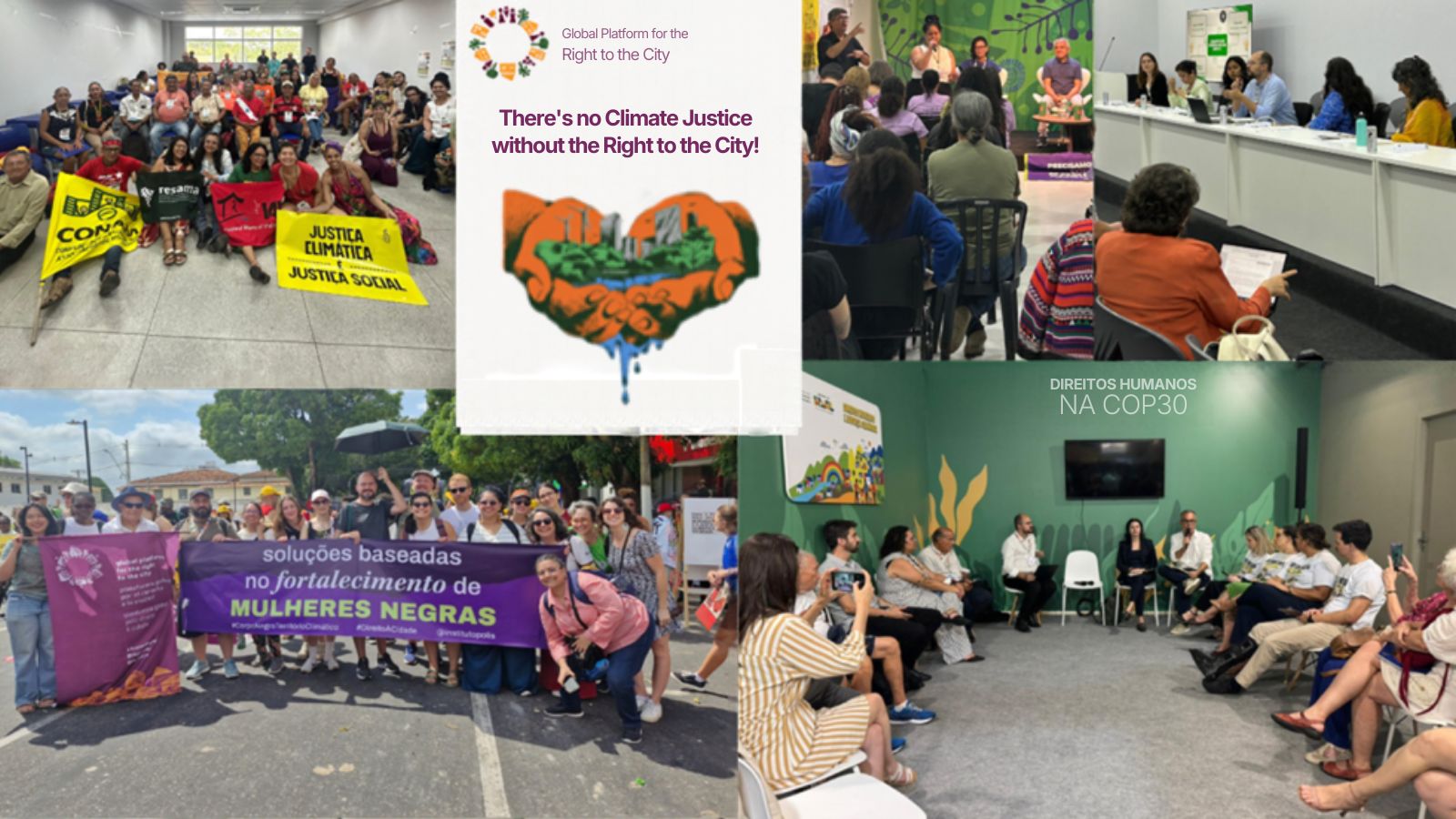
Our engagement intensified around COP30, where we worked to strengthen the visibility of the right to the city in global climate debates, highlight the role of cities and territories in climate action, and advocate for people-centred, inclusive and rights-based approaches to climate justice. Our position was clear: there is no climate justice without the Right to the City!
As we approach COP31, we build on this experience and collective work, continuing to advance a vision of climate action rooted in human rights, democratic participation, social justice and the transformation of our cities and territories.
See below the documents produced by the platform on climate justice and the right to the city.
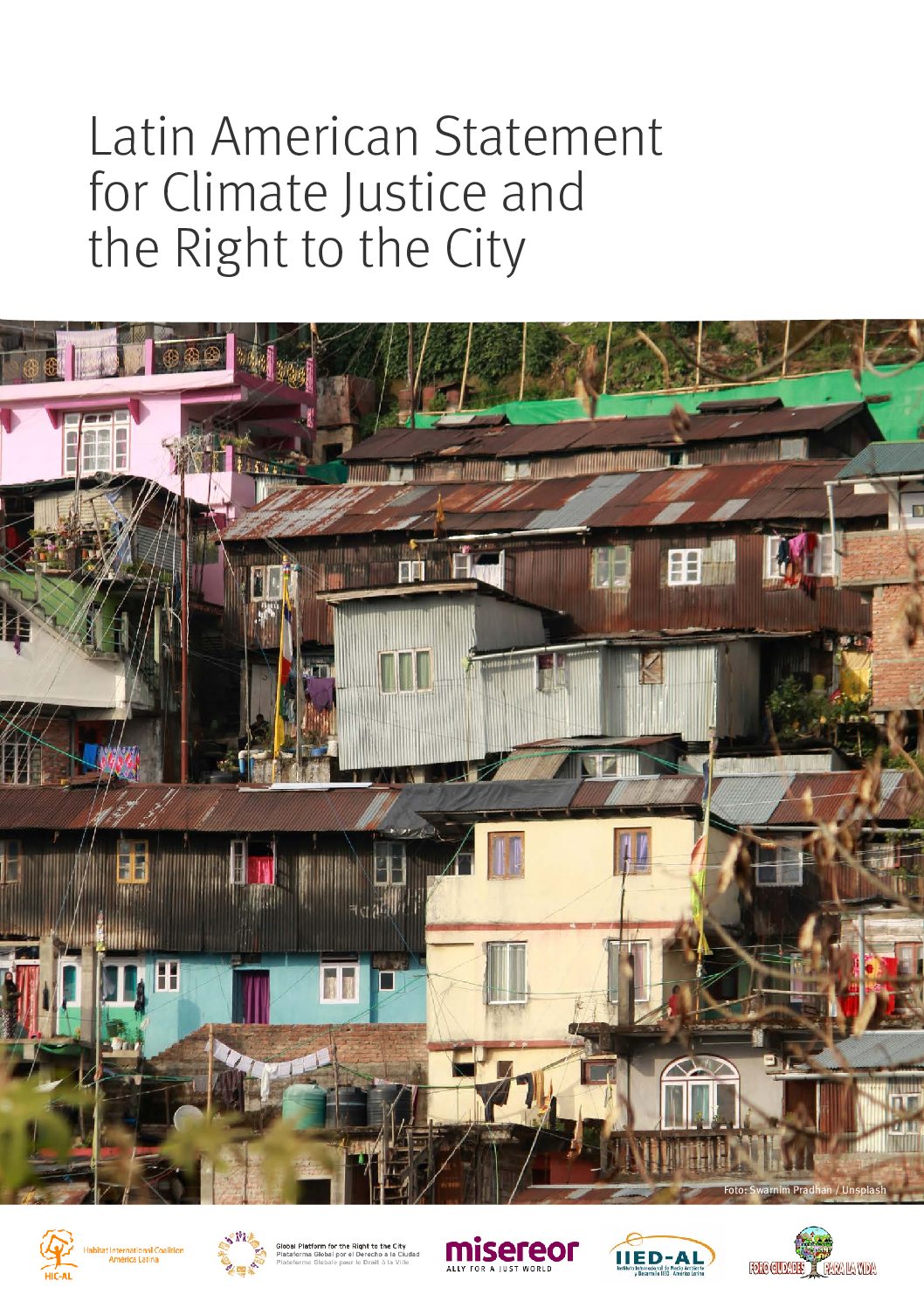
Latin American Statement for the Right to the City and Climate Justice
The GPR2C has joined Latin America, Misereor, IIED-AL and Foro Ciudades para la Vida in a preparatory process over the past few months to discuss some of the key thematics and priorities from Latin American urban movements ahead of COP30. This process resulted in a joint regional position paper on the Right to the City and Climate Justice endorsed by dozens of organizations.
DOWNLOAD THE DOCUMENT
Climate Change Glossary
Provides relevant, systematized and accessible information on the concepts, structures and strategic actors of the climate change discussion for the advocacy work of the members and partners of the Global Platform for the Right to the City, with a view to advancing climate justice through a right to the city approach.
DOWNLOAD THE GLOSSARY
Thematic Paper on Climate Justice
Sheds light on the potential of the Right to the City as “one of the reference frameworks to guide equitable Climate Action and jointly create practical agendas to mitigate Climate Change, adapt to its impacts and ensure the restitution of rights lost in the past, preserving these rights for future generations”. The document proves that there are already substantial alternatives to working for Climate Justice around the world!
READ THE DOCUMENT
Transformative actions for social mitigation of climate change

In November 2023, the HIC Regional Office for Latin America (HIC-AL) held the Forum “The habitat crisis and climate change: from local responses to international debate” held by HIC-AL, 18 experiences (9 urban and 9 rural) were presented, showing how communities and organizations in Latin America and the Caribbean are facing the climate crisis from their territories.
Based on these presentations, HIC-AL carried out a process of systematization the cases in light of the Sixth Assessment Report of the Intergovernmental Panel on Climate Change (IPCC).
Click the link below to explore the 18 cases in image format and learn how, in different territories, these transformative actions for life, habitat, and climate are being built. Unfortunately the materials are in Spanish only for the moment.
LEARN ABOUT THE CASES HERE!

About the Global Platform for the Right to the City
The Global Platform for the Right to the City (PGDC) is a diverse network, created in 2014, which brings together social movements and organizations, academics, human rights defenders, NGOs and local governments committed to political action and social change through the promotion, defence and realization of the Right to the City at all levels, especially for people and communities affected by exclusion and marginalization.
What is COP31?
COP31 is the 31st United Nations Climate Change Conference, scheduled to take place at the Antalya Expo Center in Antalya, Turkey, from November 9 to 20, 2026. This summit features an unprecedented co-governance structure, where Turkey serves as the physical host and manages the Global Climate Action Agenda, while Australia officially leads the political negotiations. The conference primarily focuses on establishing ambitious financial contributions for developing nations—aiming for a target of $120 billion annually by 2035—and driving non-negotiated global actions, such as achieving a 35% electrification rate in global energy demand and halving global waste growth to keep the 1.5°C climate goal within reach.