
9–20 November 2026 | Antalya, Türkiye
The 31st United Nations Climate Change Conference (COP31) will take place from 9 to 20 November 2026 at the Antalya Expo Center in Türkiye, bringing together governments, international institutions, civil society organisations, social movements and other stakeholders to advance global climate negotiations and action.
Based on COP30 participation and position, the Global Platform for the Right to the City (GPR2C) and its members will be following and contributing to COP31 through different activities, events and advocacy initiatives, bringing urban and territorial perspectives into discussions on climate action.
For the Platform, addressing the climate crisis requires placing people, human rights and social and environmental justice at the centre of public policies. Climate change is not only an environmental challenge: it is also a housing, labour, economic and urban justice issue. Its impacts are unevenly distributed, disproportionately affecting people and communities already experiencing inequalities, precarious living conditions and exclusion from decision-making processes.
The right to the city offers a framework for advancing inclusive, democratic and territorially grounded climate action, connecting climate justice with housing, public services, decent work, gender equality, social protection, participation and the protection of commons.
Bringing the right to the city into climate action
COP31 takes place in the context of the implementation of the Paris Agreement and the follow-up to the first Global Stocktake. The COP31 Presidency’s Action Agenda identifies 10 priority topics structured around the six pillars of the Global Climate Action Agenda, seeking to ensure continuity and alignment with the outcomes of the first Global Stocktake.
Several of these discussions are particularly relevant to the work of the GPR2C and its members:
- Housing and adequate living conditions: Climate impacts such as extreme heat, flooding and displacement threaten housing security and habitability, particularly in informal settlements and among low-income communities.
- Climate-resilient cities and territories: Urban adaptation must guarantee access to essential public services, infrastructure and safe, healthy environments, prioritising communities most exposed to climate risks.
- Just transition and decent work: Workers in the informal economy, including waste pickers and other essential workers, must be recognised and included in climate policies, financing and decision-making.
- Gender and social justice: Climate action must address structural inequalities and recognise women’s contributions, particularly in care work, community organising and local resilience.
- Climate finance and public investment: Resources must reach local governments and communities, supporting rights-based, participatory and publicly accountable solutions.
Through the participation of its members, the Platform seeks to highlight these interconnected dimensions and strengthen the links between global climate commitments and local action.
Events
Members of the Global Platform for the Right to the City will be participating in COP31 through different events, discussions, advocacy activities and knowledge-sharing initiatives.
We invite all GPR2C members to share their participation, activities, events and contributions to COP31 so that we can help amplify their work and perspectives. This page will be regularly updated throughout COP31 to showcase the diversity of initiatives, experiences and voices across the Global Platform for the Right to the City. Please send us your news, resources and event information so we can include them!
Download the GPR2C Agenda at the COP31
Click on the links for each event for more information.
10 November 2026
– Time: 10:30–11:30 (Antalya time, UTC+3)
– Location: GTF/UCLG Pavilion
– SDI speakers: Rokhaya Fall, urbaSEN, Senegal; Anta Gueye, Senegalese Federation of Residents (FSH), Senegal.
This session will explore how locally led adaptation can be strengthened and integrated into national and sub-national climate plans and policy strategies, drawing on the experiences and priorities of communities and local organisations.
Climate Resilience for Housing Justice
- Time: 12:30–13:30 (Antalya time, UTC+3)
- Location: Resilient Cities, Buildings and Cooling Pavilion – Room C505, Blue Zone
- Organisers: Instituto Pólis and Brazil’s Ministry of Cities.
Building on COP30’s recognition that housing is climate action, this session will explore policies and practices that strengthen climate resilience and advance housing justice. Discussions will address the upgrading and retrofitting of existing housing, reducing embodied carbon, extending thermal resilience to all housing conditions—including self-built and informal settlements—and expanding access to adequate housing for low-income households.
Occupational Health and Safety in a Just Transition: Voices from the Informal Sector
-
Time: 16:00 (Antalya time, UTC+3)
-
Location: ILO Just Transition Pavilion
-
Organisers: WIEGO and the International Alliance of Waste Pickers, with contributions from CUT Brazil and StreetNet International.
This session will explore how climate shocks, including extreme heat and flooding, affect the health, safety and livelihoods of workers in the informal economy. Drawing on research and worker-led experiences, the discussion will examine how occupational safety and health can become an integral part of a just transition, ensuring that informal workers are recognised and protected in climate policies.
11 November 2026
Zero Waste, Healthy Cities and Healthy Workers: Advancing Climate and Health Justice in the Global South
- Time: 10:30–11:30 (Antalya time, UTC+3)
- Location: Health WHO Pavilion
- Organisers: GAIA, Fundación Basura, Instituto Pólis, Universidad Andina Simón Bolívar, REDLacre and Wellcome Trust.
This session will explore how zero-waste approaches can improve people’s well-being, strengthen community ties and promote democratic, locally based waste management systems. It will also address the health risks associated with inadequate waste management, particularly air pollution and toxic exposure linked to plastics and waste incineration.
Launch of the Locally Led Adaptation Plan to Accelerate Solutions (LLA PAS)
– Time: 10:30–11:30 (Antalya time, UTC+3)
– Location: Joint MCF Pavilion
– SDI speaker: Sikhangezile Page, Zimbabwe Homeless People’s Federation.
This session will introduce the Locally Led Adaptation Plan to Accelerate Solutions (LLA PAS), highlighting the importance of community-led approaches in advancing locally grounded climate adaptation.
– Time: 11:30–12:30 (Antalya time, UTC+3)
– Location: Higher Education for Climate Action Pavilion
– SDI speaker: Joe Muturi, President of Slum Dwellers International (SDI).
This session will address equity in North–South research partnerships, exploring whose knowledge is recognised and how research collaborations can contribute to more inclusive and equitable climate and energy transitions.
Why Climate Solutions Fail Without Women and Girls
– Time: 14:00–15:00 (Antalya time, UTC+3)
– Location: TED Countdown House
– SDI speaker: Sikhangezile Page, Zimbabwe Homeless People’s Federation.
This discussion will highlight why women’s and girls’ perspectives, leadership and participation are essential to developing effective and inclusive climate solutions.
Reparations and Demilitarization: Peoples’ Demands for a Just and Equitable Transition
– Format: Press conference
– Time: 15:30–16:00 (Antalya time, UTC+3)
– Location: Press Conference Room 2, Area D4 (Yunus Emre)
– Organisers: ESCR-Net.
– Participant: Hilary Zhou, Zimbabwe People’s Land Rights Movement (ZPLRM), Zimbabwe.
The press conference will bring forward people’s demands for reparations and demilitarization as essential dimensions of a just and equitable transition, connecting climate justice with accountability and the rights of affected communities.
Zero Waste, Healthy Planet: Circularity without Harm
-
Time: 17:00–18:00 (Antalya time, UTC+3)
-
Location: To be confirmed
-
Organisers: Zero Waste Europe, the French Solid Waste Partnership and ISWA, in partnership with Health Care Without Harm, the Climate and Clean Air Coalition, ICLEI, the BRS Secretariat, WBCSD and ADEME.
-
WIEGO participation: Sonia Dias, WIEGO Waste Specialist.
This event will explore the links between waste management, public health and climate action through a One Health approach. Discussions will address waste prevention, environmentally sound waste management, the health impacts of plastics and residual waste, and the policies and safeguards needed to develop safe and inclusive circular economy systems. WIEGO’s Sonia Dias will contribute to a panel on reducing the health impacts of waste management.
12 November 2026
High-Level Dialogue: Urban Resilience, Adaptation and Climate Action
- Time: 13:30–17:00 (Antalya time, UTC+3)
- Location: Plenary Hall 2 (Akdeniz)
- Conveners: COP31 Presidency of Türkiye and UN-Habitat.
This high-level event will bring together Heads of State and Government, leaders of international organisations and CEOs to strengthen political leadership, advance climate adaptation and accelerate practical action towards resilient cities and communities. Through two thematic Leaders’ Dialogues, the event will focus on translating adaptation priorities into concrete investments, strengthening climate-resilient infrastructure, and mobilising international cooperation and financing partnerships.
Science and Research for Urban Climate Action: Closing the Evidence Gap for Informal Settlements
- Time: 15:00–16:00 (Antalya time, UTC+3)
- Location: Blue Zone Side Event 3 (Zerzevan)
- Conveners: UN-Habitat, the COP31 Presidency, UNFCCC through the Marrakech Partnership for Global Climate Action, and the Climate High-Level Champions, with support from IPCC, GCoM and IIED.
This roundtable will examine how scientific evidence and local and community knowledge can better inform urban climate action, particularly in cities in the Global South. Discussions will focus on strengthening partnerships between governments, researchers, communities and development partners, and identifying the knowledge, tools and financing needed to translate climate research into practical action.
Left out in the heat? Rethinking urban heat strategies for vulnerable groups
-
Time: 15:30–16:30 (Antalya time, UTC+3)
-
Location: To be confirmed
-
Participaton: Dan Jones, Depaul International and Robert Robinson Senior Advisor at Partners for Dignity and Rights, Adjunct Professor of Urbanism at the New School.
Extreme heat disproportionately affects people experiencing homelessness, those living in inadequate settlements and other groups facing poverty and social exclusion. This session will bring together people with lived experience, city practitioners, national governments and welfare organisations to discuss how urban heat strategies can better protect those most exposed to climate risks. Contributions will include experiences from Paris and Mannheim, national initiatives in Germany and international examples from Depaul International.
Ministerial Meeting on Urbanization and Climate Change
– Time: To be confirmed
– Location: To be confirmed
– SDI speaker: Joe Muturi, President of Slum Dwellers International (SDI).
SDI will contribute to this ministerial meeting, bringing community perspectives on urbanisation and climate change into discussions on policy and action.
13 November 2026
Delivering NDC 3.0 through Urban Transformation: A One UN Offer for Cities and Regions
- Time: 16:45–18:15 (Antalya time, UTC+3)
- Location: Side Event Room 8 – Bergama
- Organisers: UN-Habitat and United Nations University (UNU), with support from UNDP, UNEP, UNDRR, UNCTAD, UNIDO and WTO.
This official One UN side event will present the UN system’s collective offer to support Member States, cities and regions in closing the NDC 3.0 implementation gap through systemic urban transformation. It will address circular and zero-waste approaches, climate-just governance and finance, and the challenges of translating urban climate commitments into action. The event will also launch new reports and tools on urban content in NDCs, climate justice and loss and damage in informal settlements.
– Time: To be confirmed
– Location: COP31 Water for Climate Pavilion
– SDI speaker: Yvonne Nangoma Halwindi, Zambia Homeless and Poor People’s Federation.
This session will explore how community-led approaches can strengthen water resilience in informal settlements, connecting local governance and community priorities with the implementation of climate adaptation strategies.
14 November 2026
From Commitment to Implementation: Scaling Zero Waste for Climate and Clean Air
- Time: 11:30–13:00 (Antalya time, UTC+3)
- Location: Side Event Room 9 – Safranbolu
- Organisers: Instituto Pólis, GAYO, ESDO and GAIA.
Reducing methane and black carbon emissions from the waste sector is essential for near-term climate action, clean air and public health. This event will examine how integrated zero-waste approaches can address interconnected challenges, including methane emissions from landfills and dumpsites and black carbon from open waste burning and landfill fires.
Housing Justice is Climate Justice: Local Pathways to Safe Homes for the Most Exposed
- Time: 15:00–17:00 (Antalya time, UTC+3)
- Location: Global Taskforce of Local and Regional Governments (GTF/UCLG/LGMA) Pavilion
- Organisers: Build Change, Cities Alliance, Habitat for Humanity, IIED and Slum Dwellers International.
- Participation: Rodrigo Iacovini, Polis Institute and Modesta Mtambalika Kaphala, Federation of Rural and Urban Poor (FEDURP), Malawi.
More than one billion people live in informal and self-built homes highly exposed to climate risks, yet housing programmes and climate finance rarely reach them. Drawing on community-led data, savings and incremental finance, and partnerships with local governments, this roundtable will explore how national programmes and climate funds can reach the most exposed households, and how local governments can lead. It will position safe and resilient housing as a priority for climate justice and adaptation.
16 November 2026
Cutting Methane, Creating Value: The NOW Plan One Year After COP30
- Time: 11:30–12:30 (Antalya time, UTC+3)
- Location: Brazil Pavilion – Mutirão Auditorium, Blue Zone
- Organisers: Climate and Clean Air Coalition (CCAC/UNEP) and Brazil’s Ministry of the Environment and Climate Change.
This session will discuss progress in diverting organic waste from landfills in Brazil, as well as the challenges and financing mechanisms needed to accelerate implementation and scale up methane mitigation in the waste sector.
Pólis participation: Victor Argentino will contribute as a speaker.
The Future of Cities: Resilient, Inclusive and Scalable Urban Solutions
- Time: 14:00–15:00 (Antalya time, UTC+3)
- Location: Implementation Hub Pavilion (CNI stand), Blue Zone
- Organisers: Orbis Instituto, iFood, Instituto E+, SB COP and CNI.
Part of the SB COP programme, this panel will showcase urban solutions and discuss how they can be replicated and scaled up in Brazil and internationally. It will address resilient cities, urban work and infrastructure, housing, mobility, technology and the role of public authorities, platforms and civil society in shaping inclusive urban futures.
17 November 2026
From Organic Waste to Wealth: Finance Mobilization, Carbon Markets and the Business Case for Biogas and Biological Fertilisers
- Time: 10:00–11:00 (Antalya time, UTC+3)
- Location: Zero Waste Pavilion
- Organisers: Zero Waste Foundation and Global Methane Hub.
This session will address financing mobilisation, carbon markets and the economic opportunities associated with producing biogas and biological fertilisers from organic waste.
18 November 2026
-
Time: 12:30–13:30 (Antalya time, UTC+3)
-
Location: Special Event Room 3 – Assos (Amphitheatre)
-
Organisers: WIEGO and UN Women, with contributions from ICLEI Africa, Africa Just Transition Network, Brazil’s Ministry of Gender, Brazil’s Ministry of Cities, Brazil’s Ministry of Racial Equality and Asiye eTafuleni.
This session will showcase practical, gender-responsive approaches to climate action, focusing on women working in the informal economy and living in vulnerable communities. It will highlight solutions combining participatory design, decentralised renewable energy, community-based early warning systems and locally led adaptation, while recognising women as leaders, workers and essential actors in building climate resilience.
Building for All: Centering Informality in a Resilient Built Environment
– Time: 15:30–16:30 (Antalya time, UTC+3)
– Location: Resilient Cities, Buildings and Cooling Pavilion
– SDI participation: Speaker to be confirmed.
This session will focus on the importance of recognising informality and the realities of informal settlements in efforts to build a more inclusive and climate-resilient urban environment.
Already Adapting, Still Waiting: Getting Adaptation Finance to Where Communities Act
– Time: 16:00–17:00 (Antalya time, UTC+3)
– Location: COP31 Resilience Hub
– SDI speakers: Aziidah Nabasa, National Slum Dwellers Federation of Uganda; Anta Gueye, Senegalese Federation of Residents (FSH), and Rokhaya Fall, urbaSEN, Senegal; Sikhangezile Page, Zimbabwe Homeless People’s Federation.
This session will highlight the gap between communities’ ongoing adaptation efforts and their access to climate finance, bringing forward experiences and demands from grassroots organisations working on the front lines of climate change.
19 November 2026
Delivering Climate Action Through Housing: Financing Resilient, Low-Carbon Urban Futures
-
Time: 11:30–13:30 (Antalya time, UTC+3)
-
Location: Side Event Room Purple
-
Organisers: Build Change, the Government of France, Habitat for Humanity International and the Lincoln Institute of Land Policy.
-
Participation: Amira El Halabi, WIEGO’s Climate Justice Specialist and SDI speaker.
This session will explore how climate finance and public investment can support resilient, low-carbon and affordable housing. Recognising that extreme heat, flooding and displacement increasingly threaten housing security, particularly in informal settlements, the discussion will examine financing tools for housing improvements, climate-resilient construction and the integration of housing priorities into national and local climate strategies.
Members’ Resources & Contributions
Depaul International & IIED
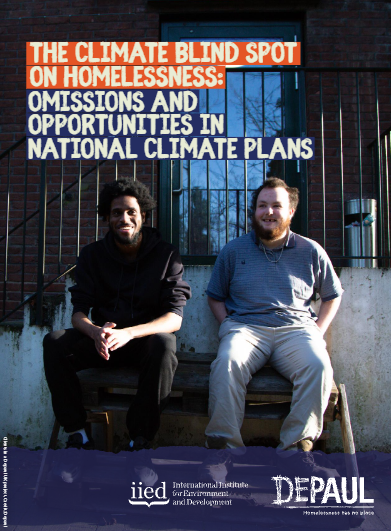
The Climate Blind Spot on Homelessness: Omissions and Opportunities in National Climate Plans
A report highlighting the absence of homelessness in national climate plans and calling for its recognition as a climate justice issue.
WIEGO
Placing informal workers at the centre of climate action
Key messages on just transition, climate finance, labour rights, gender equality and climate-resilient infrastructure.
Observatori DESCA
Analysis of the climate negotiations, multilateralism, corporate capture and the implications of COP31 for Catalonia and Spain.
The road until here
For several years, the Global Platform for the Right to the City (GPR2C) has been working to strengthen the connections between climate justice and the right to the city, recognising that the climate crisis is also a question of social, economic, spatial and environmental justice.
This collective journey began with the publication of our thematic document on the right to the city and climate justice in 2020, which laid the foundations for further reflection, advocacy and collective action. Since then, we have continued to develop this work alongside our members and allies, connecting local, national, regional and global initiatives, and bringing the perspectives of communities and social movements into climate discussions and policy processes.
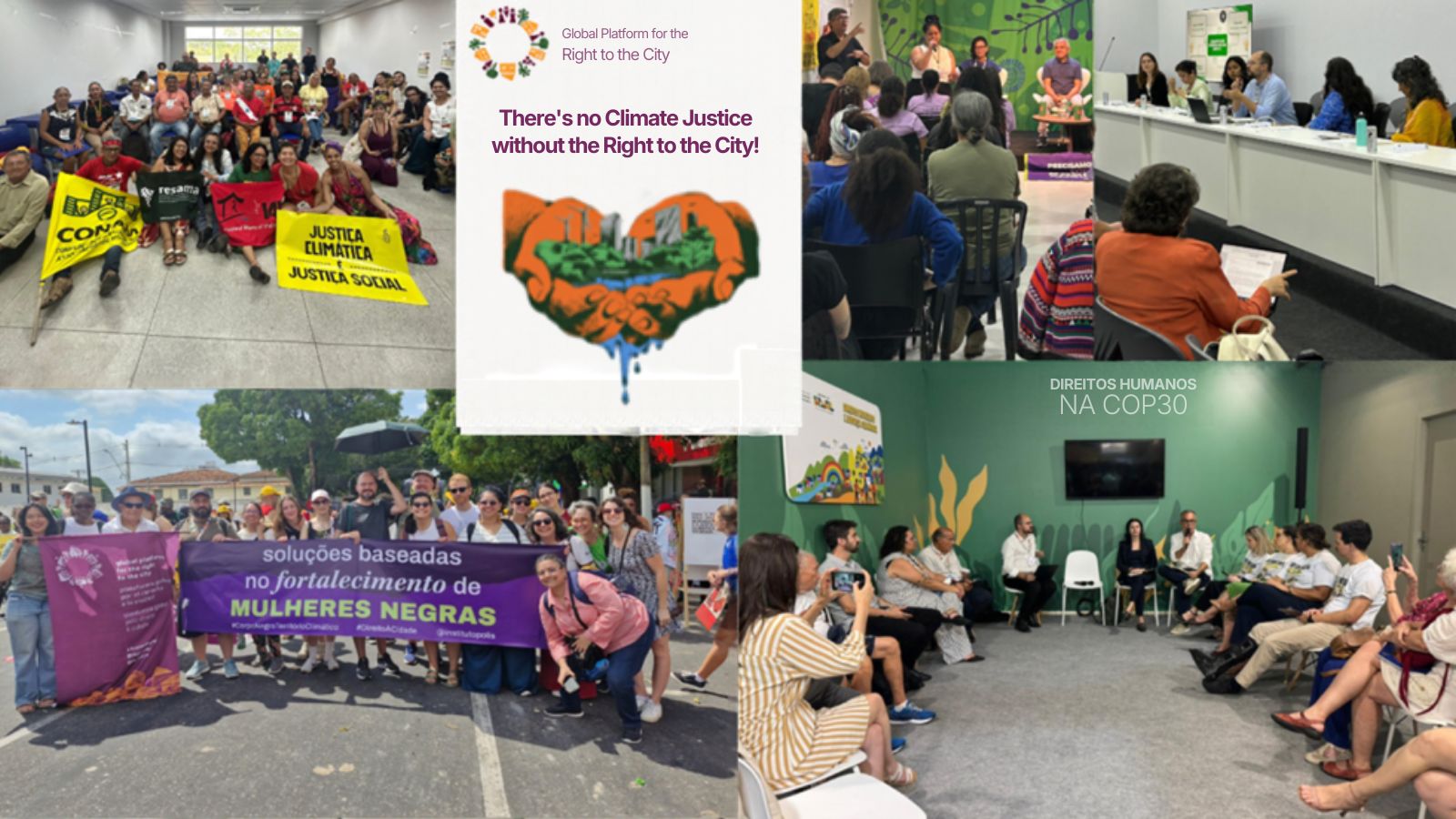
Our engagement intensified around COP30, where we worked to strengthen the visibility of the right to the city in global climate debates, highlight the role of cities and territories in climate action, and advocate for people-centred, inclusive and rights-based approaches to climate justice. Our position was clear: there is no climate justice without the Right to the City!
At COP31, we continue to advance this agenda, highlighting the importance of housing justice, just transitions, community-led climate action and accessible climate finance. Through the participation and contributions of our members and allies, we seek to strengthen a vision of climate action rooted in human rights, democratic participation, social justice and the transformation of our cities and territories.
See below the documents produced by the platform on climate justice and the right to the city.
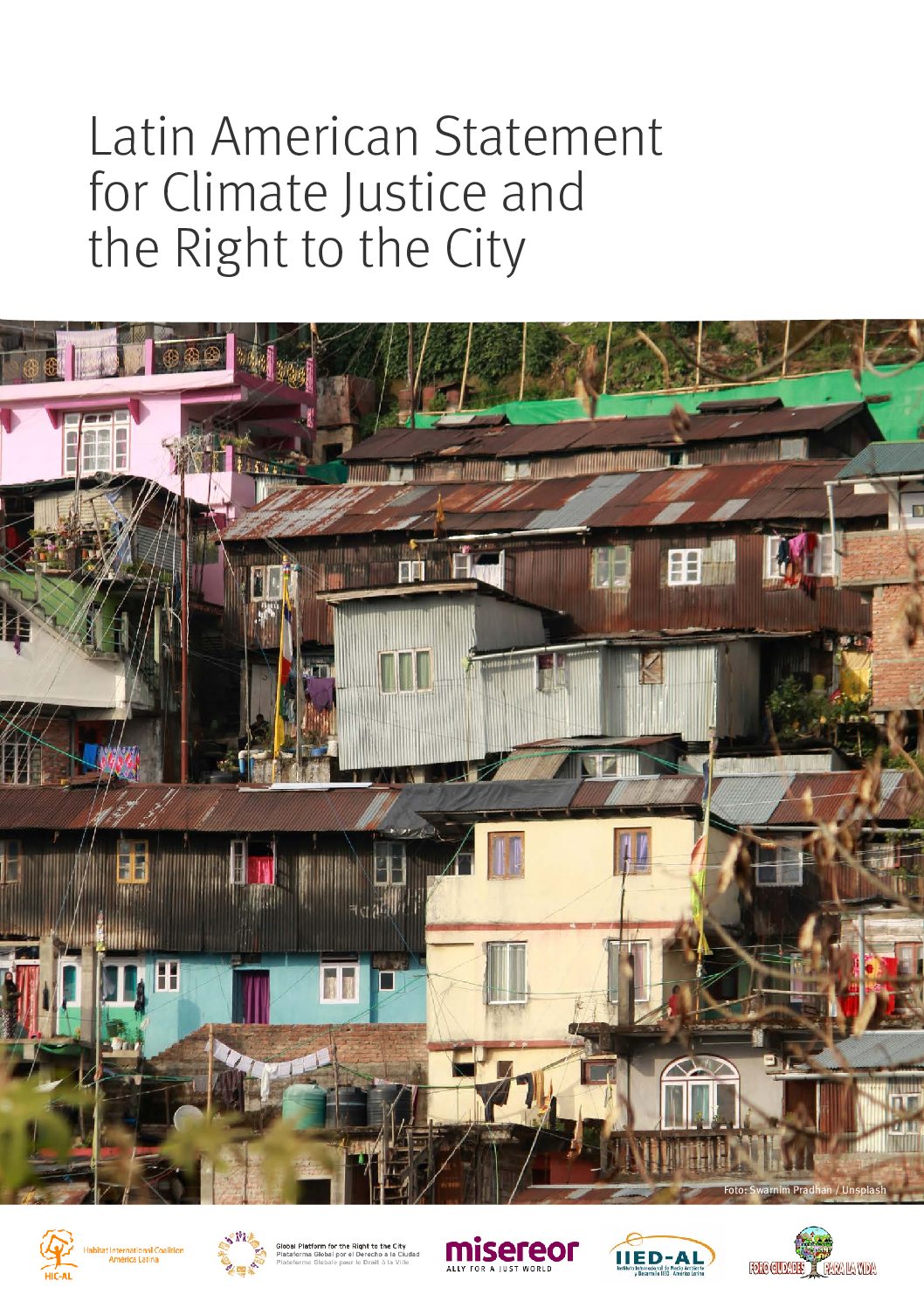
Latin American Statement for the Right to the City and Climate Justice
The GPR2C has joined Latin America, Misereor, IIED-AL and Foro Ciudades para la Vida in a preparatory process over the past few months to discuss some of the key thematics and priorities from Latin American urban movements ahead of COP30. This process resulted in a joint regional position paper on the Right to the City and Climate Justice endorsed by dozens of organizations.
DOWNLOAD THE DOCUMENT
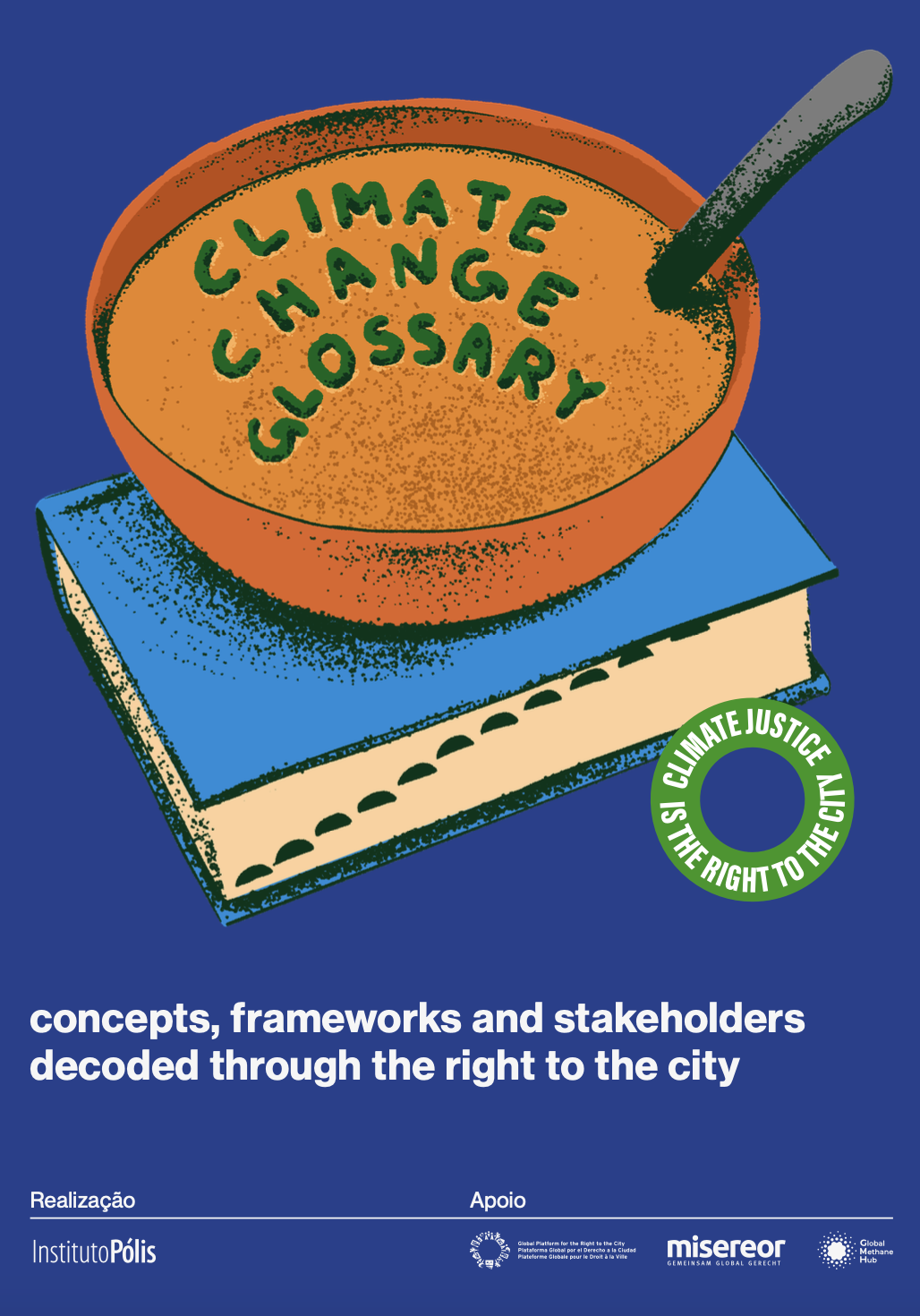
Climate Change Glossary
Provides relevant, systematized and accessible information on the concepts, structures and strategic actors of the climate change discussion for the advocacy work of the members and partners of the Global Platform for the Right to the City, with a view to advancing climate justice through a right to the city approach.
DOWNLOAD THE GLOSSARY
Thematic Paper on Climate Justice
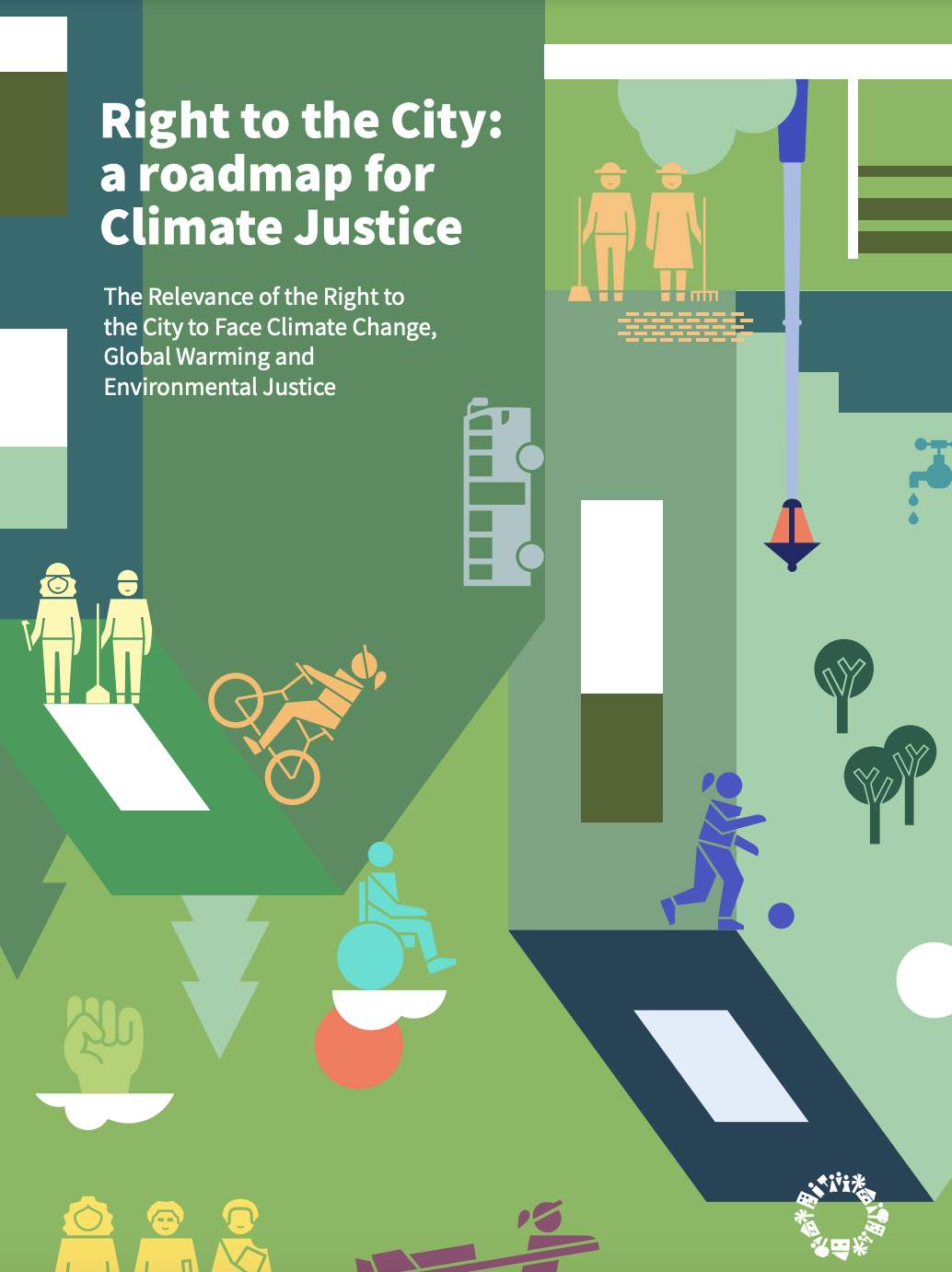
Sheds light on the potential of the Right to the City as “one of the reference frameworks to guide equitable Climate Action and jointly create practical agendas to mitigate Climate Change, adapt to its impacts and ensure the restitution of rights lost in the past, preserving these rights for future generations”. The document proves that there are already substantial alternatives to working for Climate Justice around the world!
READ THE DOCUMENT
Transformative actions for social mitigation of climate change
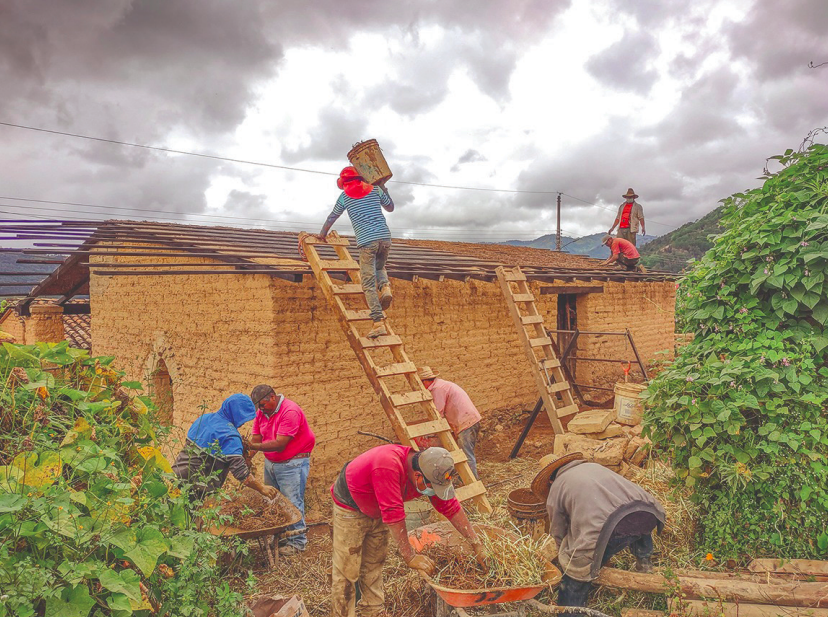
In November 2023, the HIC Regional Office for Latin America (HIC-AL) held the Forum “The habitat crisis and climate change: from local responses to international debate” held by HIC-AL, 18 experiences (9 urban and 9 rural) were presented, showing how communities and organizations in Latin America and the Caribbean are facing the climate crisis from their territories.
Based on these presentations, HIC-AL carried out a process of systematization the cases in light of the Sixth Assessment Report of the Intergovernmental Panel on Climate Change (IPCC).
Click the link below to explore the 18 cases in image format and learn how, in different territories, these transformative actions for life, habitat, and climate are being built. Unfortunately the materials are in Spanish only for the moment.
LEARN ABOUT THE CASES HERE!

About the Global Platform for the Right to the City
The Global Platform for the Right to the City (PGDC) is a diverse network, created in 2014, which brings together social movements and organizations, academics, human rights defenders, NGOs and local governments committed to political action and social change through the promotion, defence and realization of the Right to the City at all levels, especially for people and communities affected by exclusion and marginalization.
What is COP31?
COP31 is the 31st United Nations Climate Change Conference, scheduled to take place at the Antalya Expo Center in Antalya, Turkey, from November 9 to 20, 2026. This summit features an unprecedented co-governance structure, where Turkey serves as the physical host and manages the Global Climate Action Agenda, while Australia officially leads the political negotiations. The conference primarily focuses on establishing ambitious financial contributions for developing nations—aiming for a target of $120 billion annually by 2035—and driving non-negotiated global actions, such as achieving a 35% electrification rate in global energy demand and halving global waste growth to keep the 1.5°C climate goal within reach.