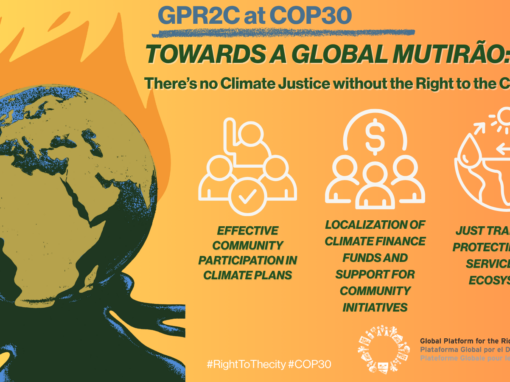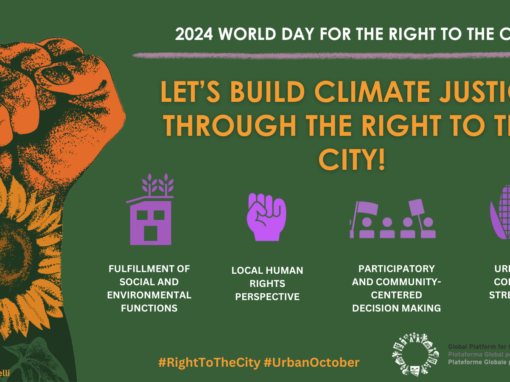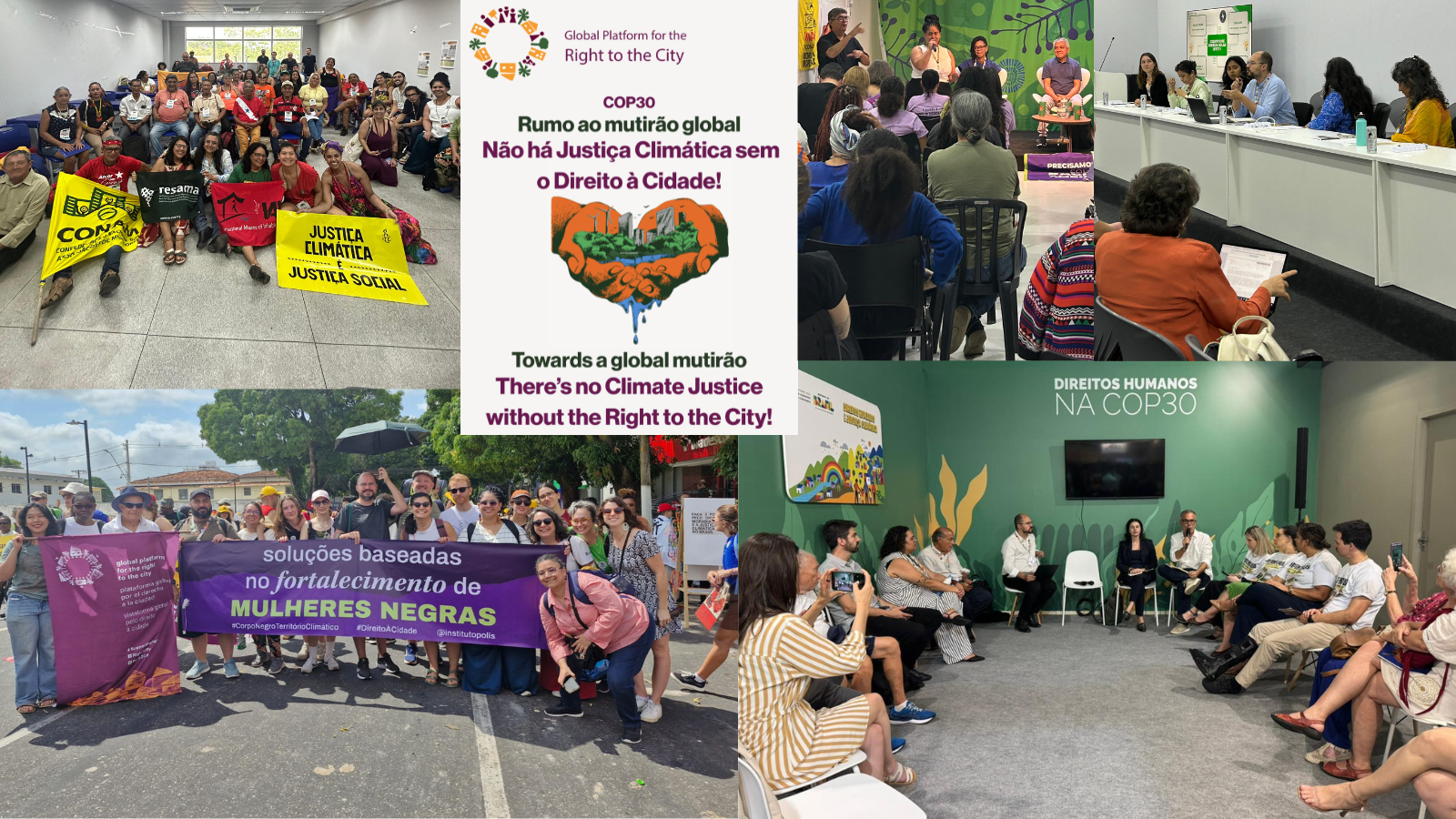

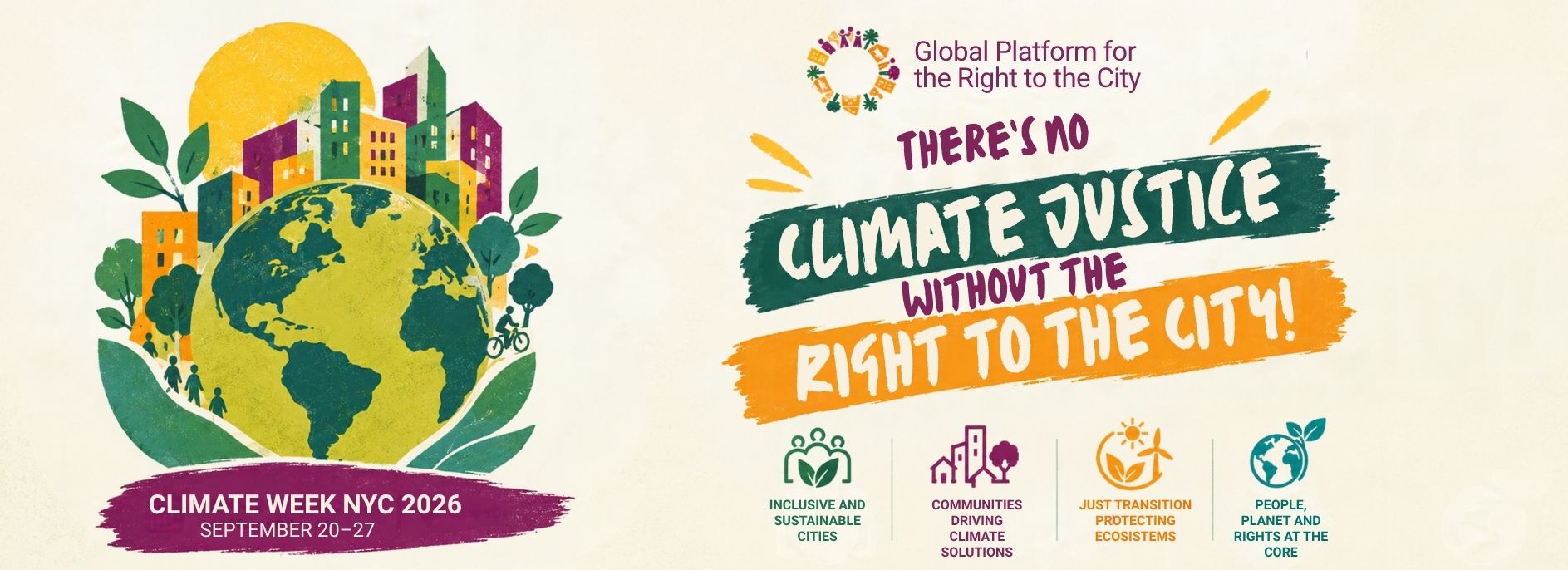
The Global Platform for the Right to the City (GPR2C) is participating this week in Climate Week NYC 2026, reaffirming a central message: there is no climate justice without the Right to the City.
The climate crisis is inseparable from the structural inequalities that shape our cities—inequalities that determine who is most exposed to environmental risks, who has access to adequate housing, and who can meaningfully participate in shaping urban futures.
We emphasize that climate action must be grounded in inclusive governance, community power, solidarity-based economies, and territories that care for people and the planet. Our participation in Climate Week NYC 2026 focuses on four key events that connect housing justice, urban governance, co-production, and the global Social and Solidarity Economy agenda
The Global Platform for the Right to the City (GPR2C) is participating this week in Climate Week NYC 2026, reaffirming a central message: there is no climate justice without the Right to the City. The climate crisis is inseparable from the structural inequalities that shape our cities—inequalities that determine who is most exposed to environmental risks, who has access to adequate housing, and who can meaningfully participate in shaping urban futures.
We emphasize that climate action must be grounded in inclusive governance, community power, solidarity-based economies, and territories that care for people and the planet. Our participation in Climate Week NYC 2026 focuses on four key events that connect housing justice, urban governance, co-production, and the global Social and Solidarity Economy agenda
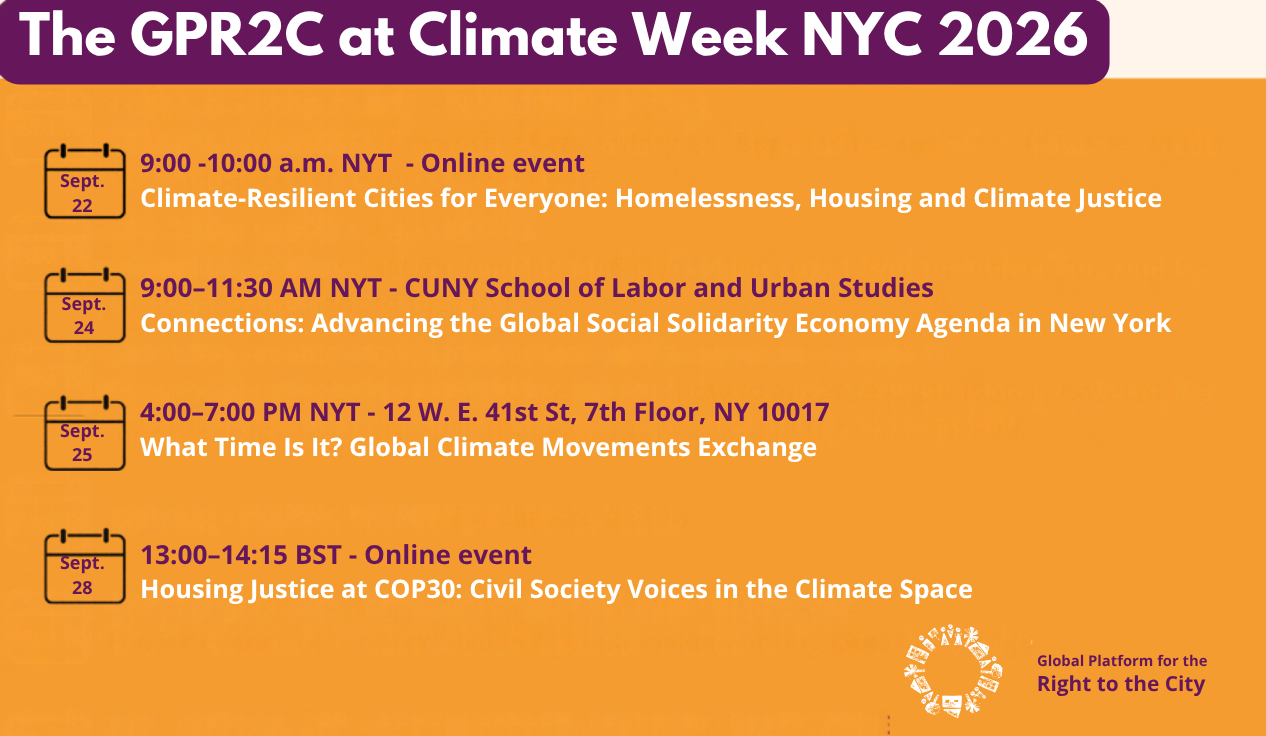
Agenda
1. Climate-Resilient Cities for Everyone: Homelessness, Housing and Climate Justice
Date: Tuesday, September 22
Time: 9:00–10:00 AM
Format: Online event
Organizers: Depaul International and the Global Climate Change–Homelessness Network
Homelessness and housing precarity are not only social injustices—they are climate injustices. Communities facing inadequate housing, displacement, or homelessness are disproportionately affected by extreme heat, flooding, pollution, and other climate impacts. In this session, the GPR2C highlights the need for rights-based housing policies, the social function of the city, and urban strategies that prioritize care, non-discrimination, and access to essential services.
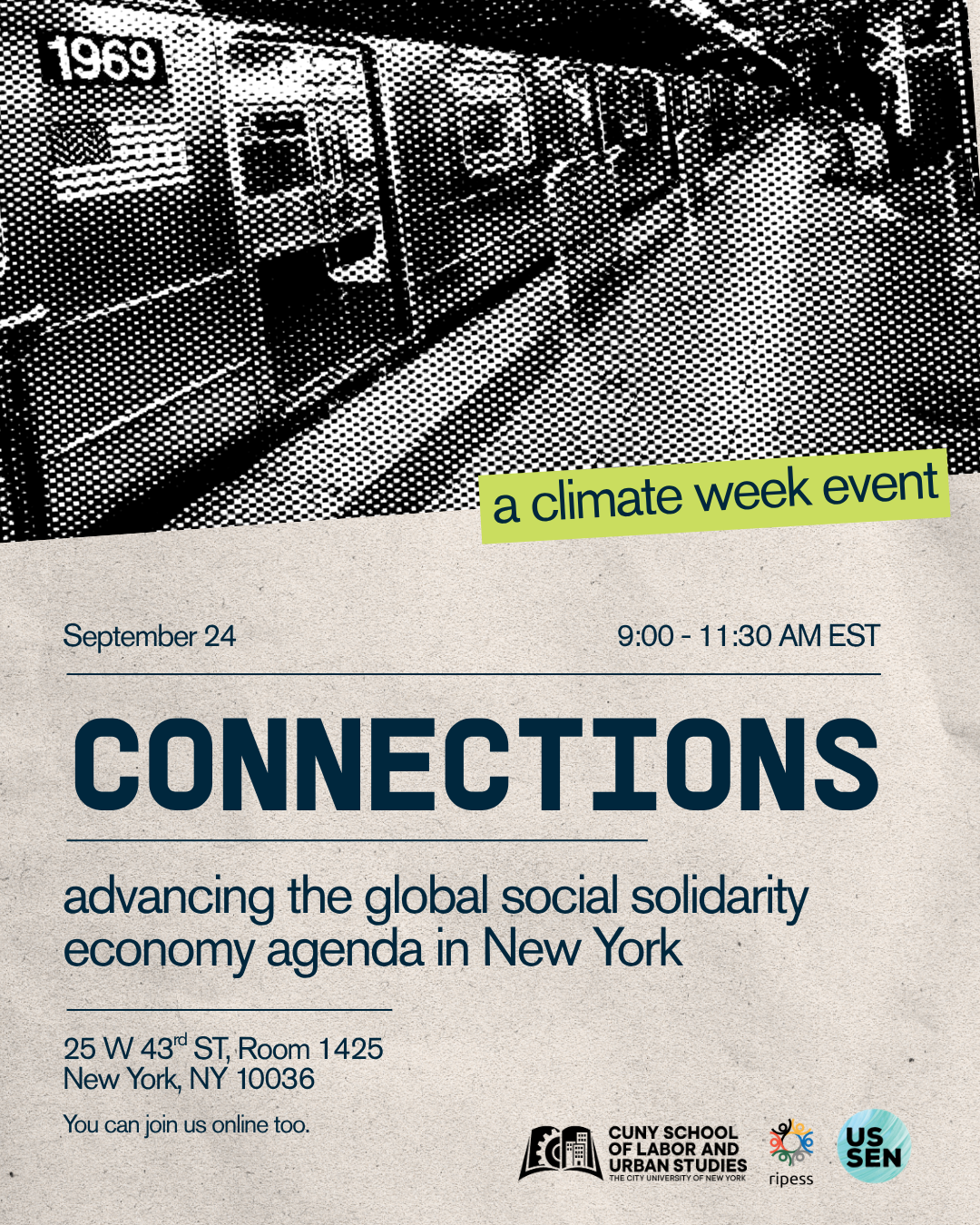
2. Connections: Advancing the Global Social Solidarity Economy Agenda in New York (UNGA & Climate Week NYC)
Date: Thursday, September 24
Time: 9:00–11:30 AM
Format: Hybrid event
Location:
CUNY School of Labor and Urban Studies
25 W 43rd St, Room 1425, New York, NY 10036
Organizers: CUNY School of Labor and Urban Studies · USSEN · RIPESS
RIPESS Intercontinental, together with the CUNY School of Labor and Urban Studies and the US Solidarity Economy Network (USSEN), will co-organize a movement‑led gathering during the UN General Assembly and Climate Week NYC. The event will bring together international SSE networks, New York and US cooperatives, community organizers, and movements working across housing and land rights, food sovereignty, care systems, migrant and racial justice, climate justice, informal work, waste‑pickers’ rights, circular and digital cooperative economies, and democratic governance.
The session will also include a dialogue with representatives of the Government of Spain and UN DESA, alongside speakers affiliated with USSEN, WIEGO, the Global Platform for the Right to the City (GPR2C), and URGENCI. This exchange will connect movement perspectives with institutional actors engaged in implementing UN General Assembly Resolutions 77/281 and 79/213 on the Social and Solidarity Economy.
3. What Time Is It? Global Climate Movements Exchange
Date: Friday, September 25
Time: 4:00–7:00 PM
Format: In-person event
Location:
12 W. E. 41st St, 7th Floor
New York, NY 10017
Co-organizers: DRUM, Grassroots Global Justice Alliance, MAR, Friends of the Earth International, Grassroots International, and others
This internationalist and movement‑led exchange focuses on climate‑impacted peoples in a period marked by war, militarization, and rising authoritarianism. Participants from Brazil, South Asia, the Caribbean, Turtle Island, and New York City will share updates and collective analysis on how movements are organizing to break the consolidation of authoritarianism and build popular power. The GPR2C contributes by connecting climate justice with the Right to the City, emphasizing community-led strategies for democratic resilience and territorial rights.
4. Housing Justice at COP30: Civil Society Voices in the Climate Space
Date: Monday, September 28
Time: 13:00–14:15 BST
Format: Online event
Publication: Housing Justice at COP30: Civil society voices in the climate space
This launch event presents the publication Housing Justice at COP30: Civil society voices in the climate space, which compiles key messages brought by civil society groups to COP30 in Belém, Brazil. The publication highlights how the integration of the housing sector into international climate debates is increasingly recognized, thanks to the work of social movements, grassroots organizations, and allied research and policy partners who have long stressed the links between housing and climate justice.
It underscores that how—and by whom—housing is framed in climate arenas has profound implications for rights and justice. The collection serves both as a stocktake and an accountability tool, calling for a strong rights-based, community-led, and justice-framed localization agenda to ensure that centering housing in climate debates becomes truly transformative.
The road until here
For some years, we have been working on the connections between climate justice and the right to the city. Starting with the publication of our thematic document in 2020 and continuing to work with our members on local, national, regional and global
The GPR2C’s presence at Climate Week NYC 2026 reinforces a shared conviction: cities are central actors in climate action, but they can only fulfill this role if they become inclusive, democratic, and sustainable territories. Climate justice requires real participation, redistribution, solidarity-based economies, adequate housing, quality public spaces, non-discrimination, and protection of the commons.
Together with movements, communities, and local governments, we continue building a global agenda that places the Right to the City at the heart of climate justice.
See below the documents produced by the platform on climate justice and the right to the city.
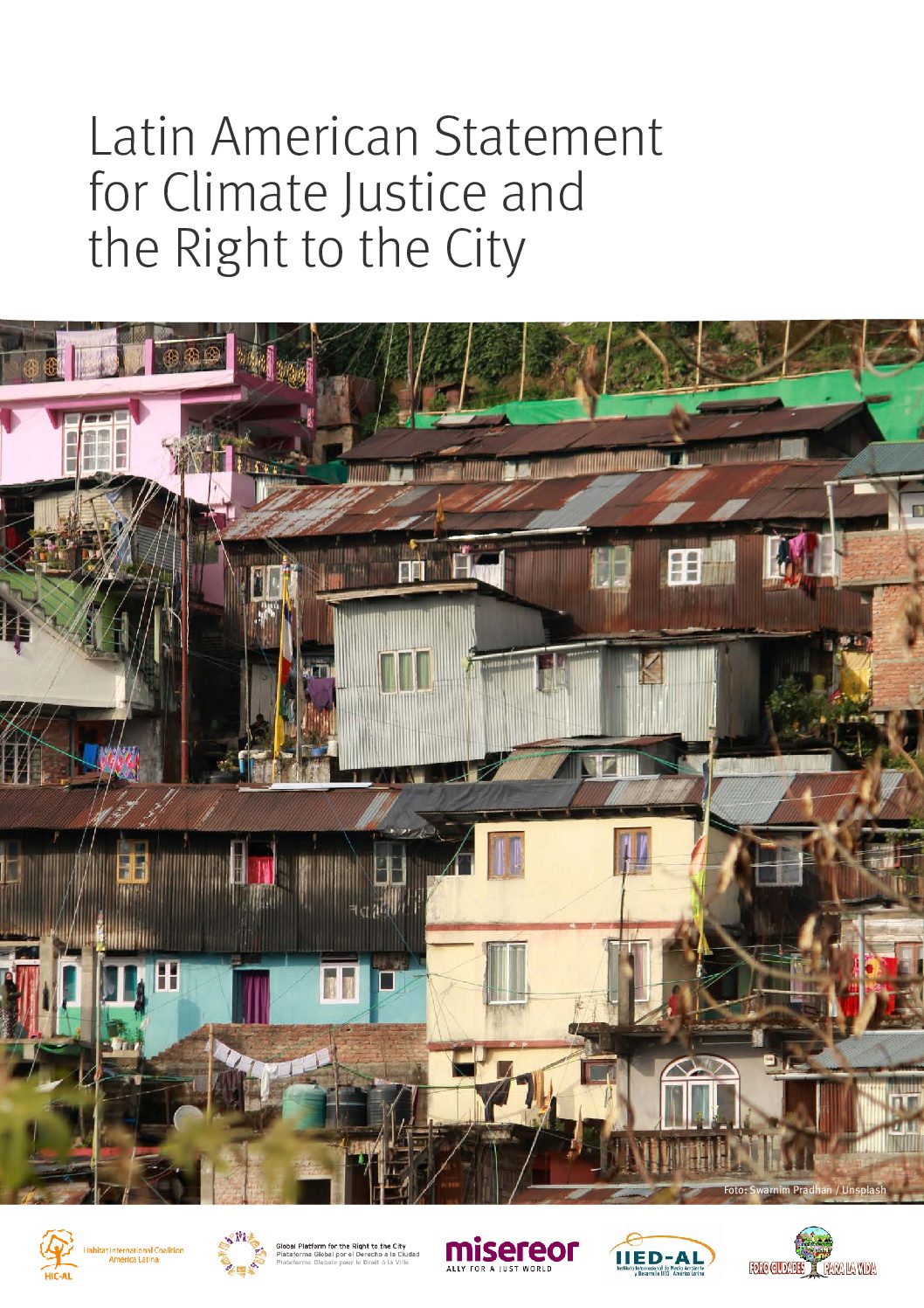
Latin American Statement for the Right to the City and Climate Justice
The GPR2C has joined Latin America, Misereor, IIED-AL and Foro Ciudades para la Vida in a preparatory process over the past few months to discuss some of the key thematics and priorities from Latin American urban movements ahead of COP30. This process resulted in a joint regional position paper on the Right to the City and Climate Justice endorsed by dozens of organizations.
DOWNLOAD THE DOCUMENT
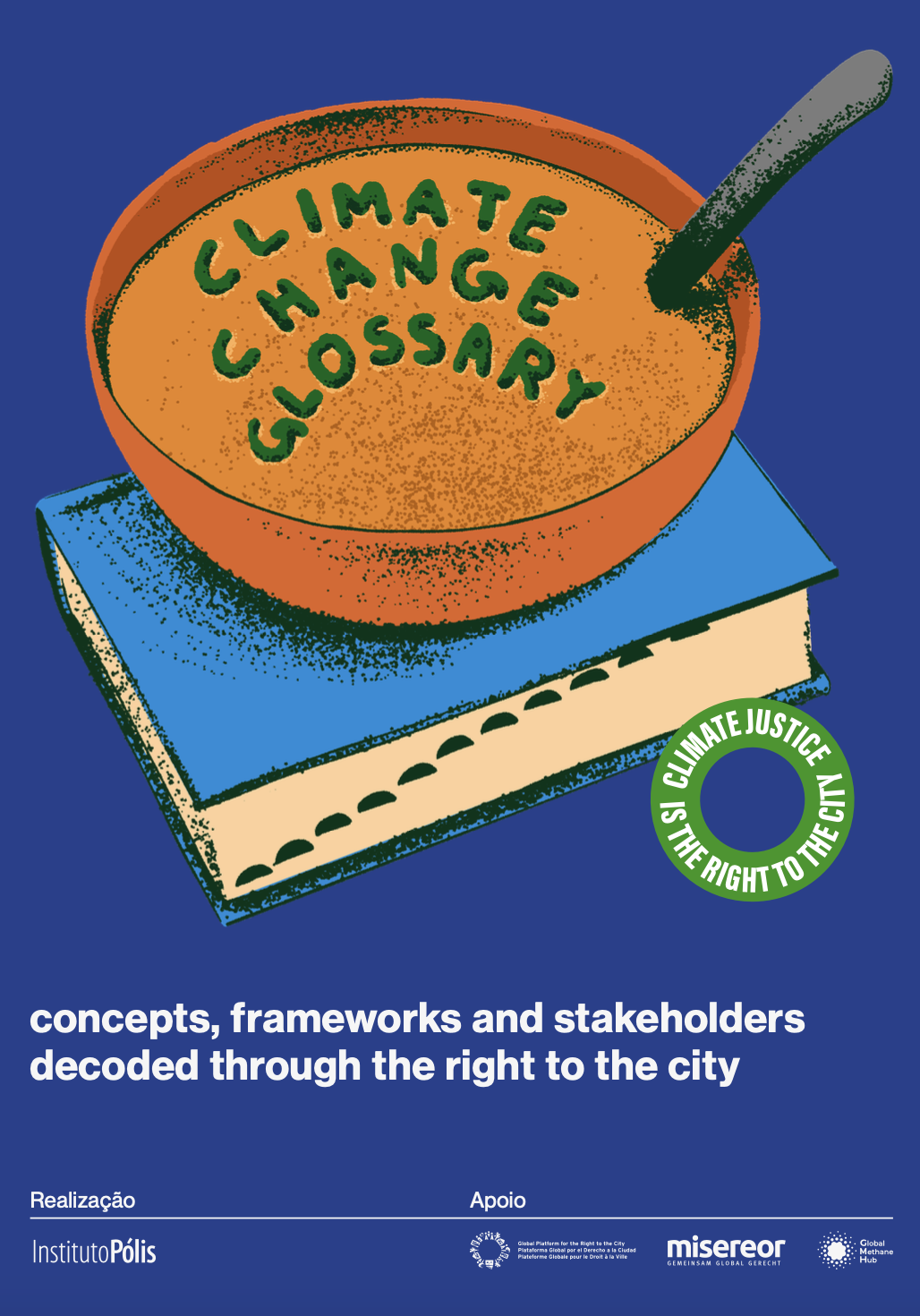
Climate Change Glossary
Provides relevant, systematized and accessible information on the concepts, structures and strategic actors of the climate change discussion for the advocacy work of the members and partners of the Global Platform for the Right to the City, with a view to advancing climate justice through a right to the city approach.
DOWNLOAD THE GLOSSARY
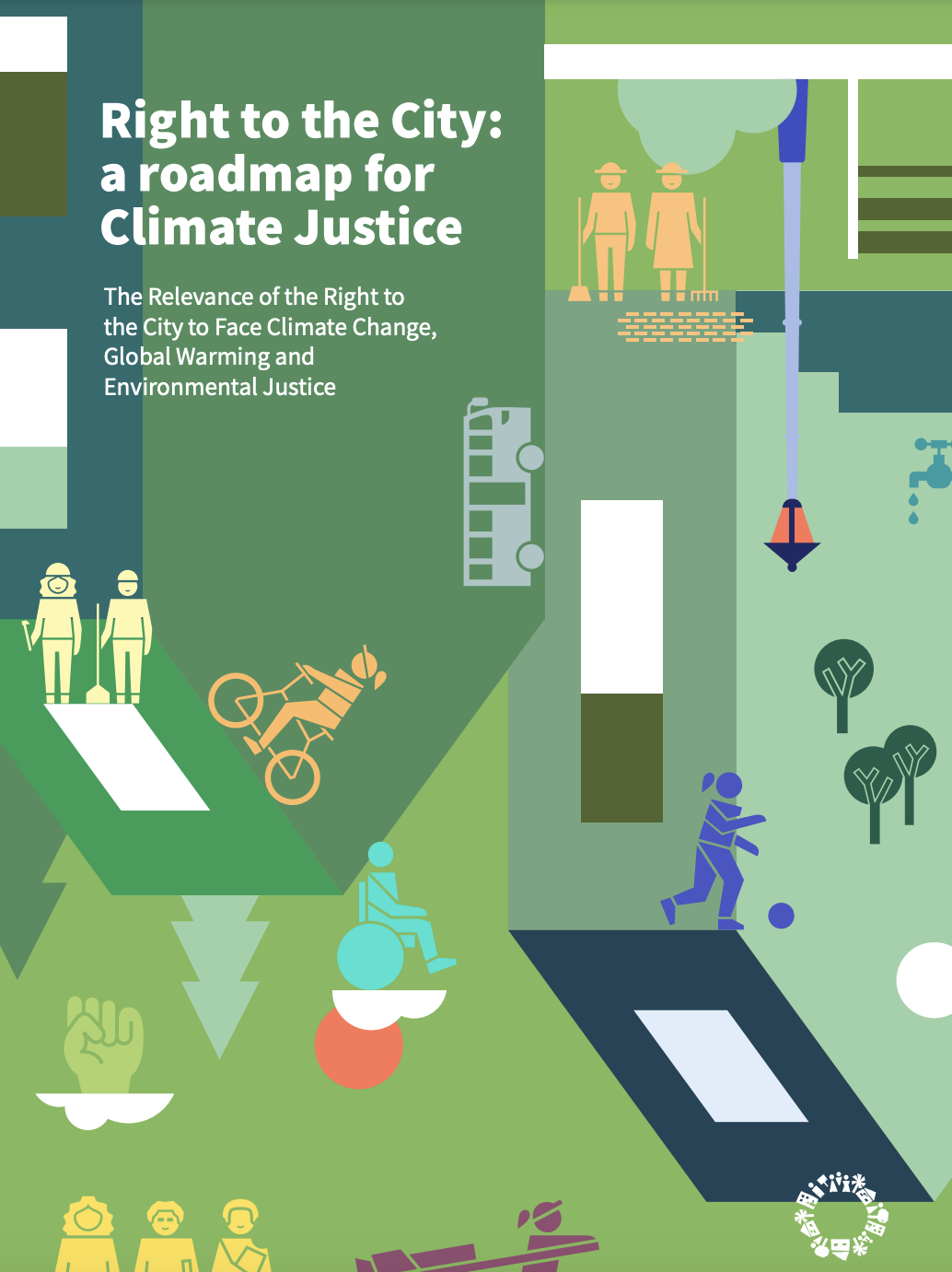
Thematic Paper on Climate Justice
Sheds light on the potential of the Right to the City as “one of the reference frameworks to guide equitable Climate Action and jointly create practical agendas to mitigate Climate Change, adapt to its impacts and ensure the restitution of rights lost in the past, preserving these rights for future generations”. The document proves that there are already substantial alternatives to working for Climate Justice around the world!
READ THE DOCUMENT

About the Global Platform for the Right to the City
The Global Platform for the Right to the City (PGDC) is a diverse network, created in 2014, which brings together social movements and organizations, academics, human rights defenders, NGOs and local governments committed to political action and social change through the promotion, defence and realization of the Right to the City at all levels, especially for people and communities affected by exclusion and marginalization.